







Which Drills Work Best for Stainless Steel? The Definitive Guide
Drilling stainless steel can feel like a nightmare if you rush it. One moment you are cutting, and the next, the metal screeches. The bit smokes. The hole turns blue. You have just encountered "work hardening," and your drill bit is likely ruined.
To drill stainless effectively, you need high heat resistance and specific geometry.
I have spent years on shop floors listening to that dreaded screech. I know that success comes down to three things: Material (Cobalt or Carbide), Speed (Low RPM), and Feed (Heavy Pressure).
This guide covers everything you need to know. We will look at the best bits, the right speeds, and how to keep your tools cool.
Why is stainless steel so hard to drill?
The primary reason stainless steel is hard to drill is "work hardening." As you drill, friction generates heat. If the bit rubs without cutting, the stainless steel reacts to the heat by instantly becoming harder than the drill bit itself.
Understanding Work Hardening
Standard steel is relatively forgiving. You can often get away with high speeds or dull bits. Stainless steel (especially 304 and 316 grades) is different. It contains chromium and nickel. These elements give it corrosion resistance, but they also make it tough.
When you let a drill bit dwell (spin without cutting), it creates friction. This friction heats the localized area of the hole. The metal's crystal structure changes. It essentially forms a "glaze" or hard skin.
Once this happens, a standard High-Speed Steel (HSS) bit cannot penetrate it. You are no longer cutting metal; you are just generating more heat.
Key takeaway: You must keep the tool cutting. Never let it ride on the surface.
What are the best drill bits for stainless steel?
The best drill bits for stainless steel are Cobalt (HSS-Co) and Solid Carbide. Cobalt bits (specifically M35 or M42 grades) contain 5-8% cobalt, providing the heat resistance needed to cut through hard alloys without softening.
The Hierarchy of Drill Bits
Not all bits are created equal. Here is the breakdown of what works and what fails.
1. Cobalt (The Industry Standard)
For most maintenance and fabrication jobs, Cobalt is king.
- M35 Cobalt: Contains 5% Cobalt. It is affordable and durable. It works for most 304 stainless applications.
- M42 Cobalt: Contains 8% Cobalt. It is harder and can take more heat. Use this for 316 stainless or thicker plates.
Note: Cobalt bits are brittle. If you are using a hand drill, be careful not to twist the drill side-to-side, or the bit will snap.
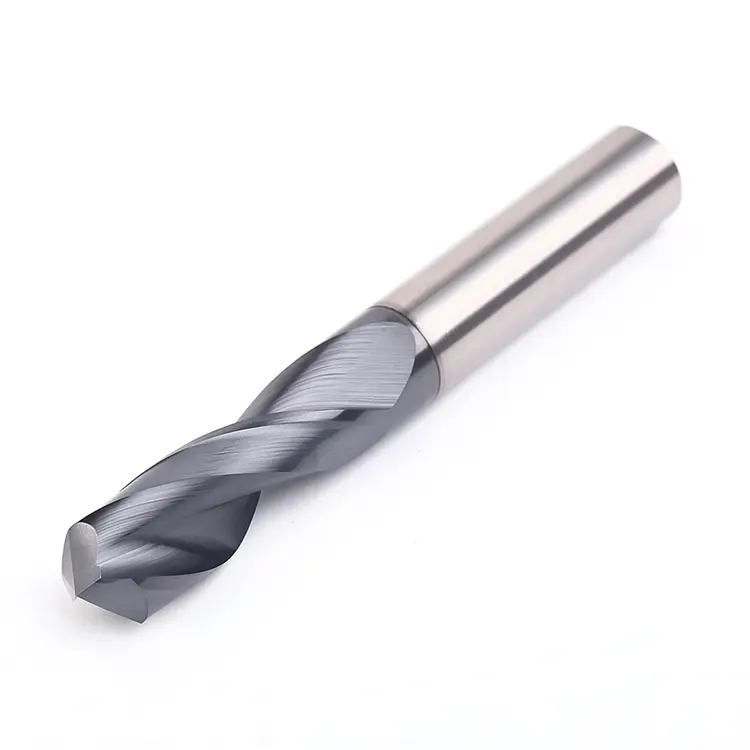
2. Solid Carbide (The High-Production Choice)
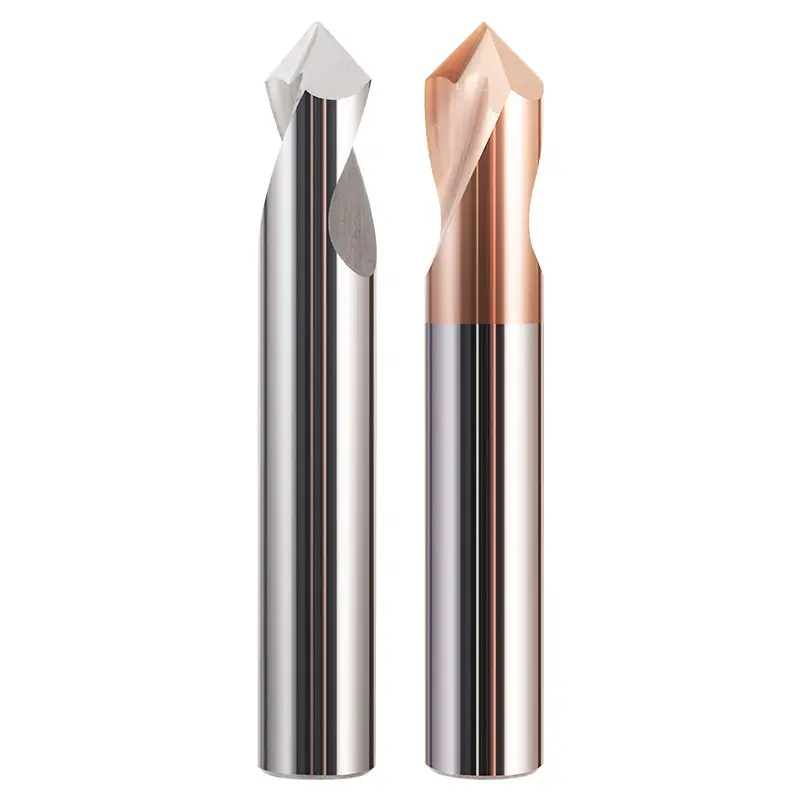
If you are running a CNC machine or a rigid drill press, Carbide is superior. It is extremely hard. It allows for faster drilling speeds than Cobalt. However, it is very expensive and shatters easily if there is any vibration.
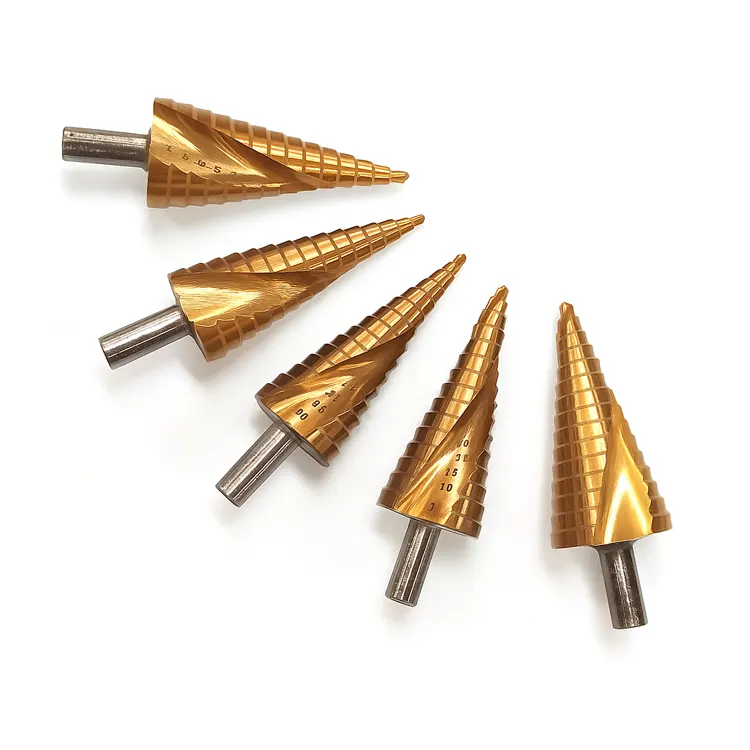
3. Titanium Nitride (TiN) Coated (The "Maybe" Choice)
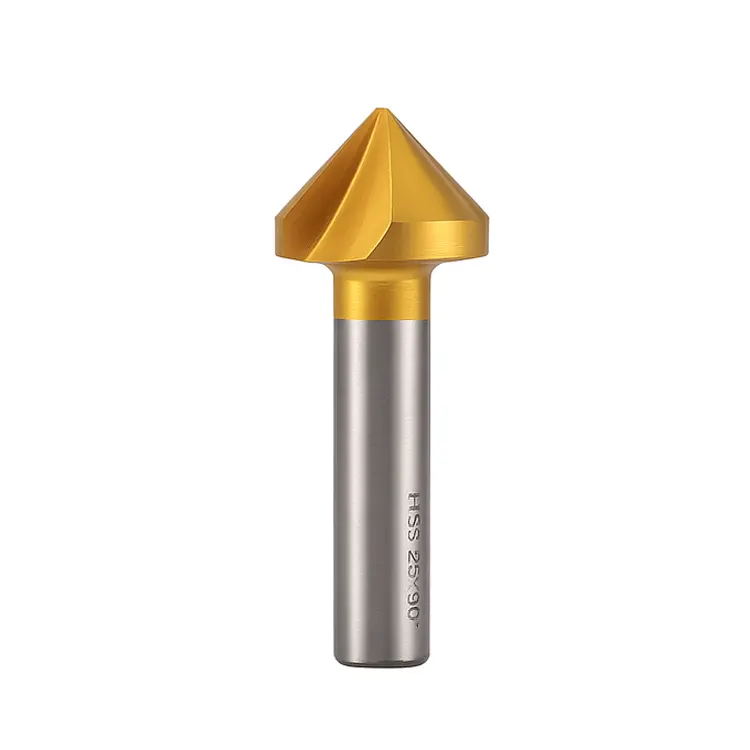
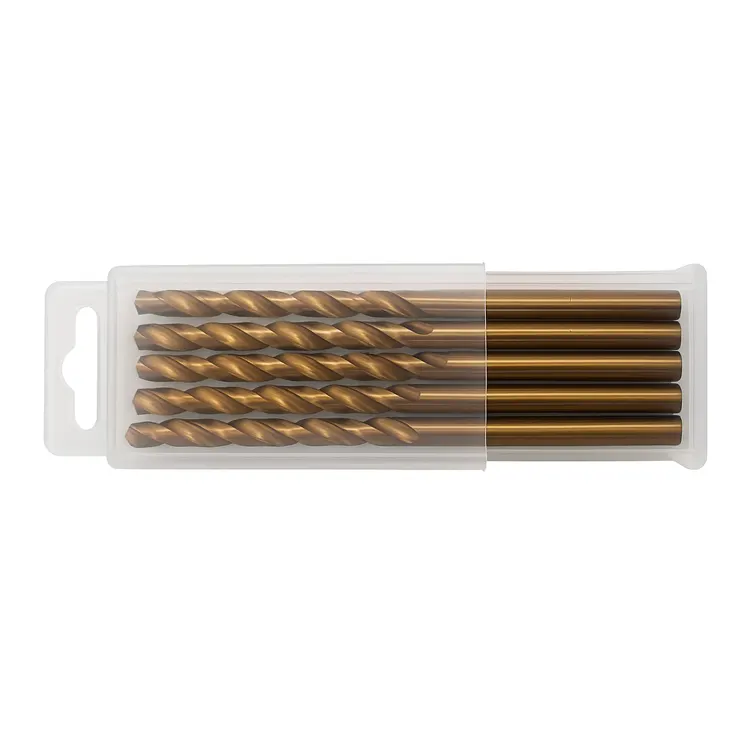
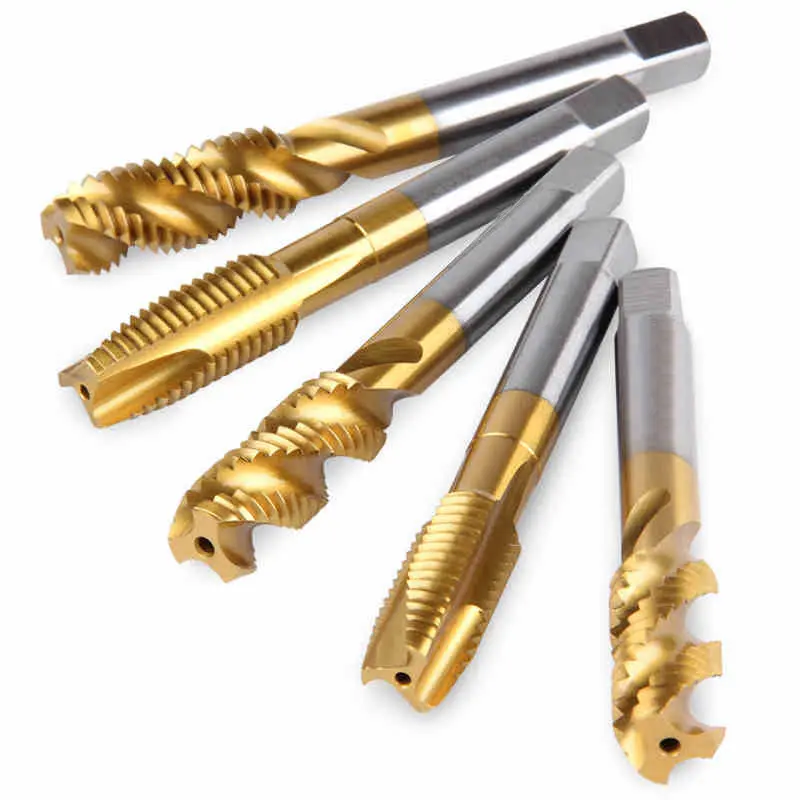
These are gold-colored bits. They work okay for thin sheets. However, once the gold coating wears off (which happens quickly with stainless), the underlying steel is usually too soft. Avoid these for deep holes.
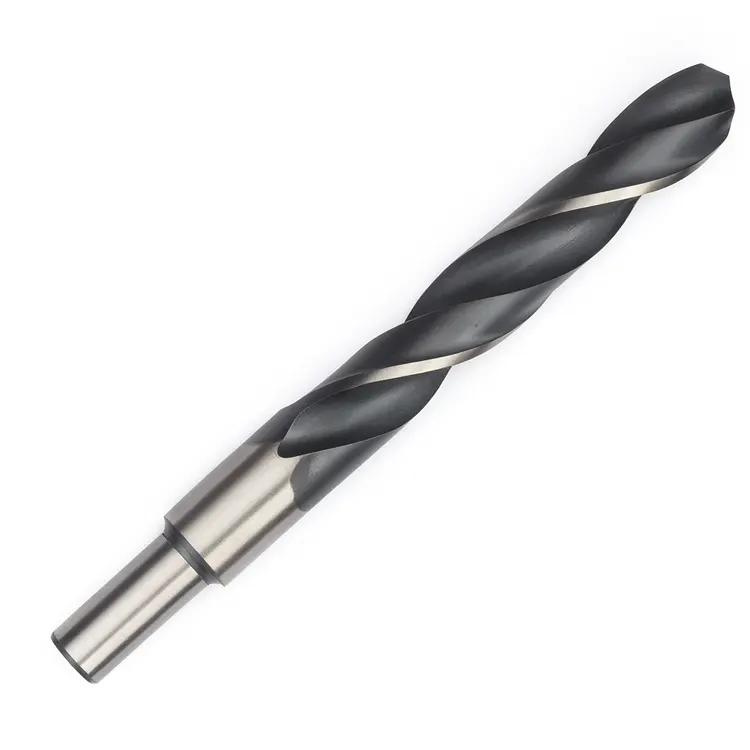
4. Black Oxide / Standard HSS (The "Do Not Use" Choice)
Do not use standard black oxide bits. They cannot handle the heat. They will dull instantly and cause work hardening.
Pro Tip: For a deeper dive into how tool materials affect different metals, check out ourmaterial-based drilling guides.
Comparison: Cobalt vs. Carbide for Stainless
Choose Cobalt for handheld drilling and general maintenance because it is tougher and resists breaking. Choose Carbide for production environments using drill presses where speed and hole finish are critical.
| Feature | Cobalt (HSS-Co) | Solid Carbide |
| Hardness | High | Very High |
| Heat Resistance | Excellent | Superior |
| Brittleness | Moderate | High (Snaps easily) |
| Cost | $$ | $$$$ |
| Best Equipment | Hand Drill / Drill Press | Rigid Drill Press / CNC |
| Re-sharpening | Easy | Difficult (Needs diamond wheel) |
What is the correct speed (RPM) for drilling stainless?
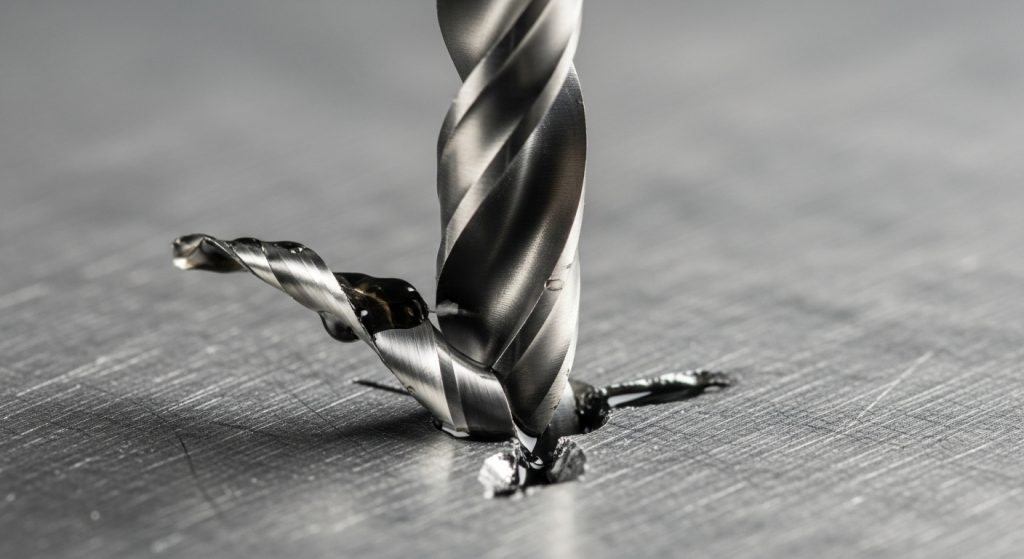
You must drill stainless steel at a significantly lower RPM than mild steel. A general rule of thumb is to use 30-50% of the speed you would use for carbon steel, coupled with heavier feed pressure.
The "Low and Slow" Rule
Speed kills drill bits in stainless. If you spin too fast, you generate heat faster than the chip can remove it.
Here is a quick reference chart for drilling speeds (assuming HSS/Cobalt bits):
| Drill Bit Diameter | RPM for Stainless (Approx.) |
| 1/8" (3mm) | 800 - 1000 RPM |
| 1/4" (6mm) | 400 - 500 RPM |
| 1/2" (12mm) | 200 - 250 RPM |
| 3/4" (19mm) | 100 - 150 RPM |
The Importance of Feed Pressure
This is where most people fail. You cannot be gentle.
- You need to apply enough pressure to force the cutting edge under the metal surface.
- You want to see continuous spiral chips coming out of the hole.
- If you see dust or small flakes, you are not pushing hard enough.
Compare this to carbon steel: Carbon steel is much more forgiving regarding feed rates. You can learn more about the differences in tooling approaches in our guide onhow to drill carbon steel with indexable tools.
Do I need coolant to drill stainless steel?
Yes, using a coolant or cutting oil is mandatory when drilling stainless steel. It serves two critical functions: it reduces friction to prevent work hardening and evacuates heat to preserve the life of the drill bit.
Choosing the Right Lubricant
Don't just use WD-40. It is a solvent, not a high-pressure cutting oil.
- Cutting Paste/Wax: Excellent for hand drilling. It sticks to the bit and doesn't fly everywhere.
- Dark Thread Cutting Oil: Contains sulfur, which helps break the chip and cool the cut.
- Soluble Oil (Flood Coolant): Best for machine tools. It flushes chips out of the hole continuously.
The "Smoke" Signal
If you see white smoke, you are generating heat, but you might still be okay if you add more oil.
If you see brown or yellow smoke, you are burning the oil and the metal. Stop immediately. Let it cool. Swap to a sharp bit.
What is the best drill bit angle for stainless?
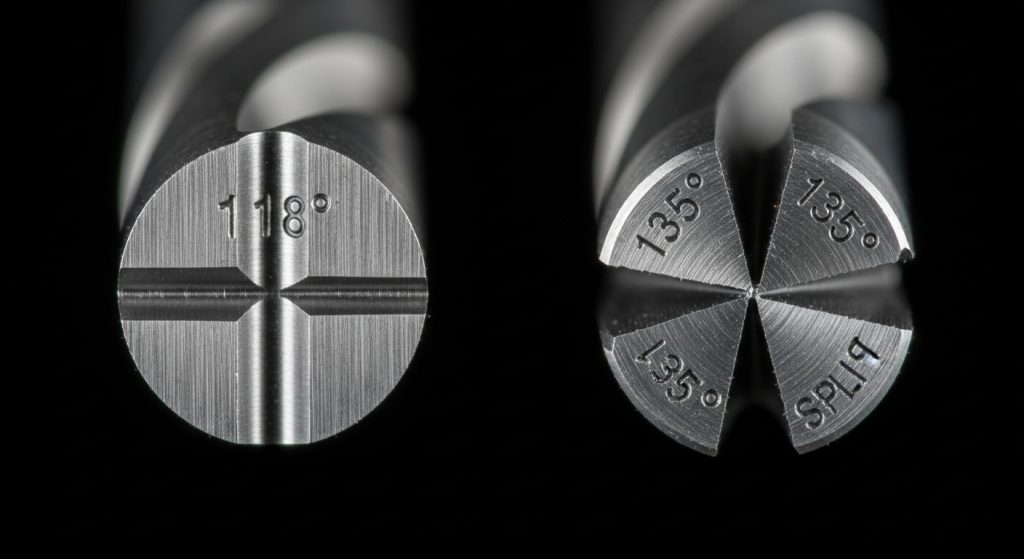
The ideal drill point angle for stainless steel is 135 degrees with a "split point." This flatter angle engages more of the cutting lip quickly, while the split point prevents "walking" and reduces the thrust pressure required to start the cut.
118° vs. 135° Split Point
- 118° (Standard Point): Pointy. Good for soft metals like aluminum. It tends to "wander" on stainless unless you use a center punch.
- 135° (Split Point): Flatter. The "split" in the tip creates additional cutting edges at the very center. It bites into the metal immediately. This is crucial for stainless because you don't want the bit spinning on the surface creating heat before it starts cutting.
Step-by-Step: How to Drill Stainless Steel Successfully
To bring it all together, follow this exact process to ensure a clean hole and a saved drill bit.
1. Mark and Center Punch
Never skip this. Stainless is slippery. Use a heavy hammer tap on a center punch to create a divot. This gives your 135° split point a home to start in.
2. Secure the Workpiece
If the metal vibrates, it work-hardens. Clamp it down tight. If you are holding it with your hand (not recommended), keep it rigid.
3. Select the Right Bit
Grab an M35 or M42 Cobalt bit. Ensure it is sharp. A dull bit is a death sentence for this project.
4. Apply Oil
Put a drop of dark cutting oil or paste on the center punch mark. Dip the drill tip in oil too.
5. Set Speed and Pressure
- Drill Press: Set the belts to a low RPM (see chart above).
- Hand Drill: Put the gearbox in "Low" (usually setting 1). Feather the trigger; do not go full throttle.
6. Commit to the Cut
Start drilling with firm pressure. Do not ease into it. Establish the chip. You want to see a nice spiral shaving curling out.
7. Peck Drilling (For Deep Holes)
If you are drilling deeper than 3x the diameter of the bit:
- Drill for a few seconds.
- Pull the bit out slightly to break the chip and let oil get in.
- Do not stop the rotation while the bit is touching the metal.
- Go back in with pressure.
Troubleshooting Common Stainless Drilling Problems
Even with the best tools, things go wrong. Here is how to fix them.
Why is my drill bit squealing?
Cause: You are rubbing, not cutting. The feed pressure is too low, or the bit is dull.
Fix: Stop. Apply more oil. Push harder. If it still squeals, the bit is dull—change it.
Why is the drill bit not making a hole?
Cause: Work hardening. The spot you are drilling has become harder than the bit.
Fix: You cannot drill through that same spot with the same bit. You have three options:
- Move the hole location (if possible).
- Use a solid carbide bit to break through the hard skin.
- Grind through the hard spot with a die grinder, then resume drilling.
Why did my drill bit snap?
Cause: Movement or clogging.
Fix: If using a hand drill, keep your wrist straight. If the bit gets stuck in the hole, do not trigger the drill. Reverse it out manually. Ensure you are clearing chips (peck drilling).
Final Thoughts on Drilling Stainless
Drilling stainless steel is a test of patience and technique. It rewards aggression—aggressive pressure and aggressive cooling—but demands conservative speeds.
If you remember only one thing from this guide: Drill stainless slowly, but push hard.
Invest in quality Cobalt bits. Throw away your black oxide bits for this application. Use plenty of oil. If you follow these rules, you will get clean holes every time without burning up your tools.
