







Carbide End Mill | Solid & Tungsten Carbide Cutting Tools
What is a Carbide End Mill?
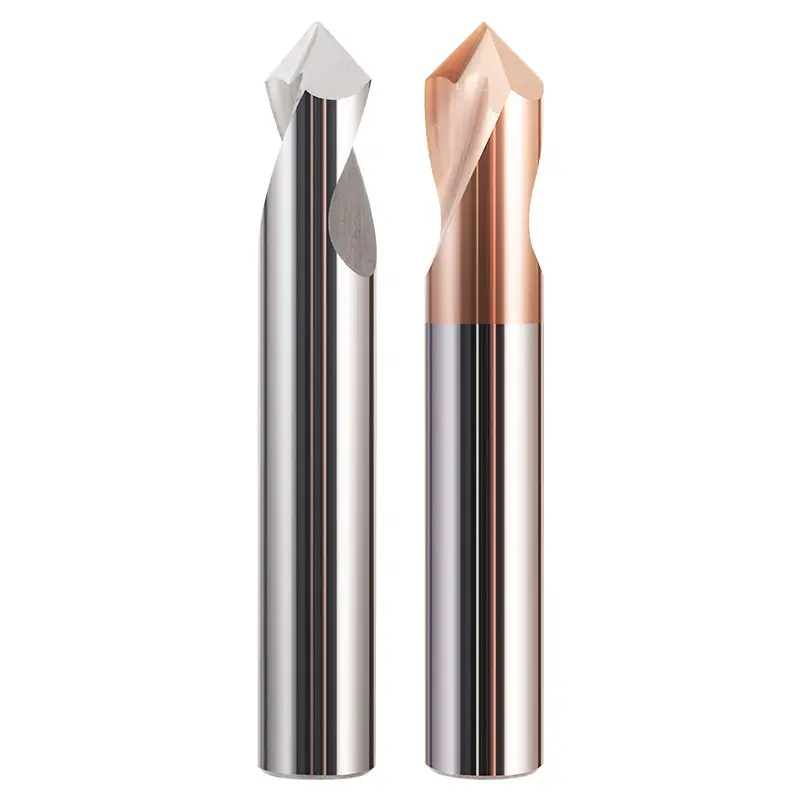
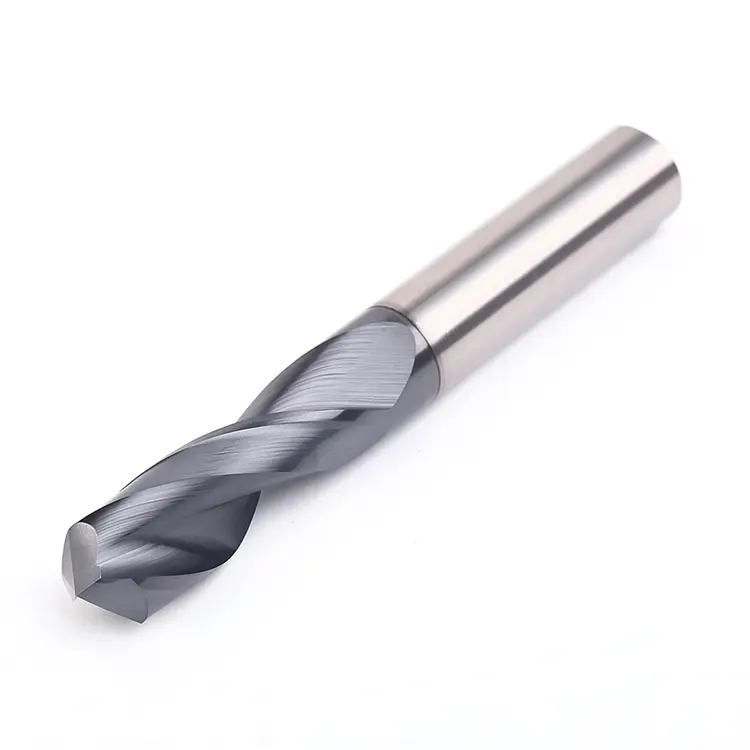
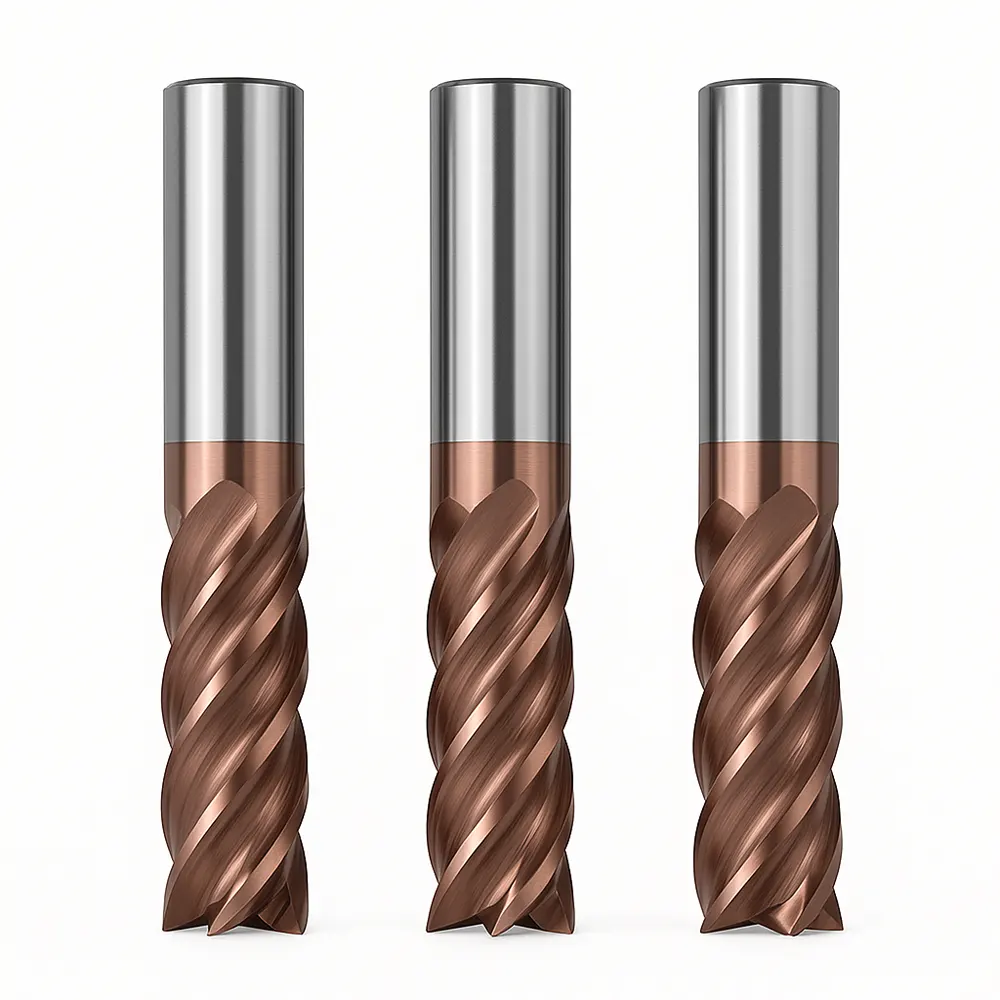
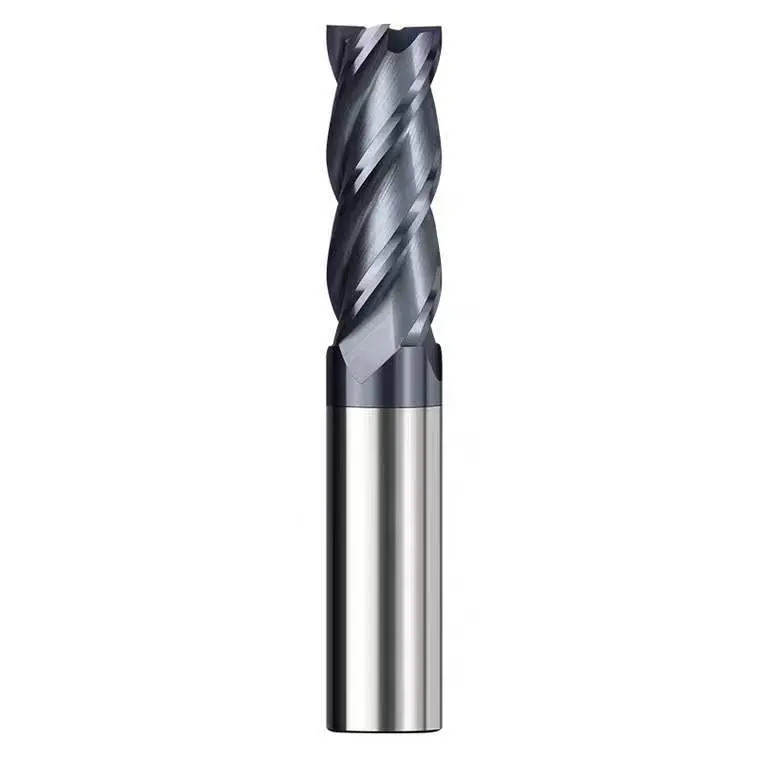
- A carbide end mill is a high-precision milling cutter fabricated of tungsten carbide tool material – an ultra-hard compound that is a product of tungsten and carbon. Carbide end mills are optimal in high-speed machining tools such as aerospace, automotive, and mold manufacturing industries due to their high hardness, wear resistance, and heat capacity, among others.
- Carbide end mills can retain sharpness at extreme conditions and not just on a few occasions, unlike conventional HSS (High-Speed Steel) tools. That is why machinists choose the solid carbide cutting tool to use with CNC milling equipment that must be operated with the highest dimensional control, high-efficiency metal removal, and excellent tool life.
Carbide End Mill: Accuracy, Power, and Performance
- The carbide end mill has become an icon of stability, precision, and engineering genius in the ever-changing environment of CNC machining and industrial metalworking. Designed to perform at the highest level, carbide end mills are the tools to provide a superior surface finish, reduce the production cycle, and improve accuracy in all machining jobs.
- You need a solid carbide end mill, whether it be to cut aerospace parts, automotive parts, or to cut precision molds, because there is no way that a traditional cutting tool will provide the power or speed that a solid carbide end mill can. We are AccurateCut, and we are in the business of designing and producing high-performance carbide end mills that are reinventing cutting excellence.
The Design of the Carbide End Mills
Carbide end mills have been carefully designed and cut into meticulous edges. There are a number of important parameters that affect the performance of the tools: geometry, flute design, coating, and material composition, which in turn affect the tool performance in terms of how well it removes metal and how long it can last.
1. End Mill Geometry
The cutting characteristics of an end mill are determined by its geometry (helix angle, rake, clearance, and so on).
- Helix angles 40deg -45deg are designed to allow easy chip evacuation and surface finishes.
- The low helix designs are more rigid for milling hard materials.
2. Flute Count and Chip Removal
- End mills with a 2-flutes are the best choice in machining aluminum because they have a good evacuation of the chip.
- Carbide cutters that have 4 flutes are ideal for cutting steel because they give it more contact edge and less tool wear.
3. Coating Technologies
- Innovative coating materials such as TiAlN (Titanium Aluminum Nitride) and AlTiN, as well as TiCN, improve the life and heat resistance of tools.
- These finishings allow the cutting of materials at high speed, particularly in the cutting of stainless steel and milling of hard materials.
4. HRC Hardness Rating
- The HRC rating is used to establish the capacity of the end mill to cut hardened materials.
- An example is the HRC60 carbide end mills, which have been designed to work with hardened steel to 60 HRC, which is with great hardness with long tool life.
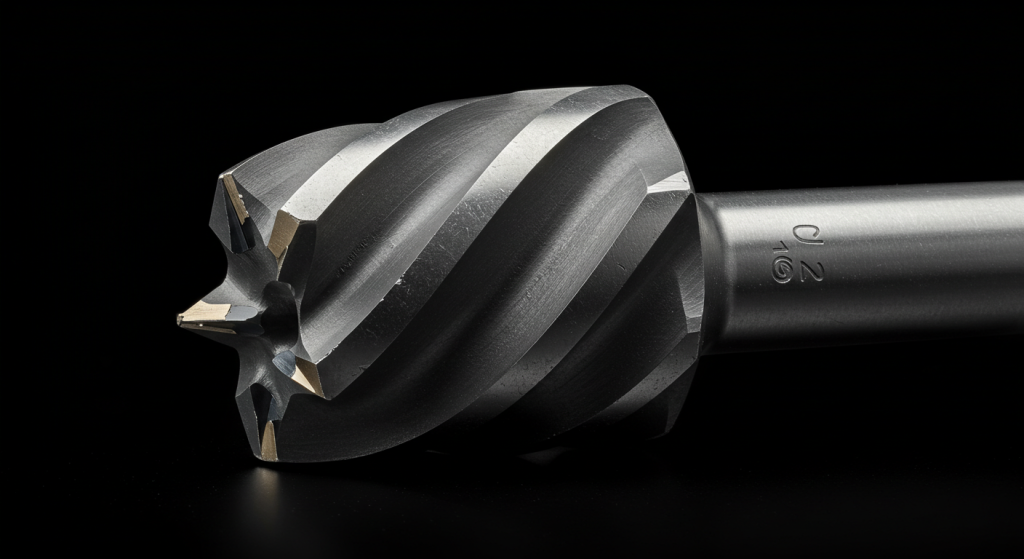
HRC60 Carbide End Mill: Cutters in Hard Materials
HRC60 carbide end mills are the latest development of tools of precision engineering. These tools are configured to both high hardness and long life, and the hardness is needed to meet the latest CNC machining requirements, as well as to be both accurate and very durable.
Features and Benefits
- Very high Hardness Capability
They are designed to cut hardened materials with increased accuracy and are therefore reliable to work with steels of up to 60 HRC, which are mostly used in the production of tools and dies.
- Excellent Longevity
Tungsten carbide alloy structure gives excellent heat and wear-resistant characteristics and reduces the frequency of changing tools and the total cost of production.
- Much Precision and Finish
Delivers superior dimensional control and mirror image finishes of surface, which are paramount in mold construction, tooling, and machining of components in automotive parts and aerospace parts.
Carbide End Mills and Their Use
1. Square End Carbide End Mill
Commonly used as a general milling tool, milling sharp edges and flat bottoms – ideal in slotting, profiling, and contouring.
2. Ball Nose Carbide End Mill
The round cutting edge is perfect for 3D contouring and in the manufacture of moulds and dies, where smooth surface transitions are required on highly complex components.
3. Flat End and Corner Radius Carbide Cutter
These are a combination of the power of a flat end and the stamina of a rounded edge – ideal in the roughing and finishing process.
4. Roughing and Finishing End Mills of Carbide
Many metals are cut away by roughing mills quickly.
Finishing mills are used to provide surface finishing with smooth and tight dimensional finishes.
5. Long Neck Mills and Micro Carbide End Mills
To use small components in precision engineering and electronics manufacturing, or to work in a tight area.
The Technologies of Using Carbide End Mills to Enhance Machining
Feed Rate Optimization and High-Speed Machining
Carbide end mills are also best in high-feed milling as they have rigidity and the best heat resistance during the cutting process. Higher spindle speeds, higher feed rates allow operators to cut down machining time and throughput.
Finish Optimization at the Surface
The design of the flute and the angle of the helix assist in the better evacuation of chips and minimisation of vibrations, which cause smoother surfaces and minimise the amount of finishing operations.
Reducing Tool Life and Efficiency
Modern finishes and cutting edges guarantee the long life of the tools and reduce the variance of performance in the continuous machining processes.
CNC Machining Optimization
The CNC milling tools of today are able to be used with advanced tool path optimization software that guarantees that the maximum amount of metal can be removed and while at the same time that dimensional accuracy is maintained.
Industrial and Commercial Applications
Carbide end mills are important in various industries:
- Titanium and nickel alloy machining tools in aerospace.
- Milling of steel and aluminum auto parts.
- Cavity and contours, Mold and die manufacturing.
- Structural and sheet metal fabrication.
- Production line and tool room tools to perform repeat high-precision machining.
Why AccurateCut Carbide End Mills?
At AccurateCut, we are not just a manufacturer of carbide end mills; we are your partners in productivity. Through extended tool grinding technologies, a competent research and development team, and a focus on sustainable production solutions, we guarantee that all tools render precision and performance.
What Sets Us Apart
OEM and Custom Cutting Tool Solutions
End mills to suit individual industrial needs.
Factory-Direct Pricing
Competitive prices on carbide cutters and industrial milling tools.
Excellence in Precision Engineering
Firm quality inspection to achieve correct dimensional control.
Fast Global Delivery
The clients are in China, the USA, Germany, India, and Japan.
Conclusion:
Since the time of mold making up to the aerospace inventions, the carbide end mill has remained in the lead in pushing the frontiers of machining excellence. These tools are the workhorse of modern manufacturing, being the hardest and heat-resistant tools with precision. In AccurateCut, we provide high-performance carbide end mills that represent engineering excellence and industrial innovation. You might be in need of HRC60 carbide cutters, custom CNC milling tools, or even coated carbide end mills, but our products will guarantee efficiency, reliability, and perfection of every cut.
