







How to Reduce Heat When Drilling Steel
There are few sounds in a machine shop more frustrating than the high-pitched screech of a drill bit dying. It’s usually followed by the acrid smell of burning oil and, if you’re unlucky, a puff of smoke that signals your tool has lost its temper—literally.
Heat is the enemy of the cutting edge. Whether you are operating a manual knee mill, a radial arm drill, or a handheld drill press, thermal management is what separates a clean, precise hole from a work-hardened mess. At Accurate Cut, we understand that precision isn’t just about measuring twice and cutting once; it’s about controlling the physics of the cut using our comprehensive material-based drilling guides.
If you are burning through bits or smoking your workpiece, you are likely missing one of three variables: appropriate speed, correct feed pressure, or effective evacuation. This guide covers the engineering principles behind heat generation and the practical steps to keep your drilling operations cool, efficient, and precise.
The Physics of Heat: Why Steel Fights Back
Before we fix the problem, let’s look at why it happens. When you drill steel, you are generating heat from two sources: shearing (the metal deforming and separating) and friction (the tool rubbing against the material).
Ideally, 60-80% of that heat should be carried away by the chip (the waste metal). If your drill bit gets hot, it means the heat is staying in the tool rather than leaving with the chip.
The Danger of Work Hardening
The biggest risk isn’t just a dull bit; it’s work hardening. When austenitic steels or even mild carbon steels are heated by friction and then rapidly cooled by the surrounding mass of metal, the structure of the steel changes. It becomes significantly harder—often harder than the HSS (High-Speed Steel) bit trying to cut it.
The Bottom Line: If you see smoke or hear a screech, stop immediately. If you try to “power through,” you are likely drilling into a hardened glaze that will ruin your tooling instantly.
Optimization of Spindle Speed (RPM)
The most common mistake we see on the shop floor is running a drill too fast. There is a direct relationship between the diameter of the bit and the required RPM.
The Golden Rule: The larger the drill bit, the slower it must turn.
Think of it in terms of Surface Feet Per Minute (SFM). The outer edge of a large drill bit travels much faster than the outer edge of a small bit at the same RPM. That speed creates friction.
Calculating the Sweet Spot
You don’t need to memorize complex physics, but you should stick to general SFM guidelines. For carbon steel, you generally want an SFM of around 90-100. For stainless steel, drop that to 40-50 SFM.
Quick Reference RPM Chart (Mild Steel):
| Drill Bit Size | Recommended RPM |
| 1/8″ | 3,000 |
| 1/4″ | 1,500 |
| 3/8″ | 1,000 |
| 1/2″ | 750 |
| 3/4″ | 500 |
| 1″ | 350 |
If you run a 1/2″ bit at 3,000 RPM, you aren’t cutting; you are friction-welding.
Feed Rate: The “Goldilocks” Pressure
Speed creates friction, but feed creates the cut. A major misconception is that you should “baby” the drill to keep it cool. This is actually counter-productive.
If you apply too little pressure, the cutting edge doesn’t bite into the material. Instead, it skids across the surface. This is called rubbing. Rubbing generates massive amounts of heat but removes no material.
The Chip Load
You need enough pressure to engage the tool’s geometry. You want the cutting edge to dig in and peel up a chip. Unlike cast iron which crumbles into powder, steel requires positive pressure to shear properly.
- Too Light: Dust or fine powder comes out. Heat builds up rapidly.
- Too Heavy: The bit chips or snaps.
- Just Right: You produce consistent, curled chips. The heat is ejected with the chip.
Lubrication and Cooling Strategy
In industrial applications, we distinguish between lubricants (which reduce friction) and coolants (which remove heat). When drilling steel, you usually need a balance of both.
Why “Motor Oil” Isn’t Enough
We often see operators grabbing whatever oil is nearby—motor oil, WD-40, or transmission fluid. While better than nothing, these aren’t optimized for metal removal.
- WD-40: Too thin. It evaporates too quickly at the cutting tip to provide sustained cooling.
- Motor Oil: High viscosity but poor heat transfer. It smokes easily and creates a mess.
The Professional Choice: Soluble Oil
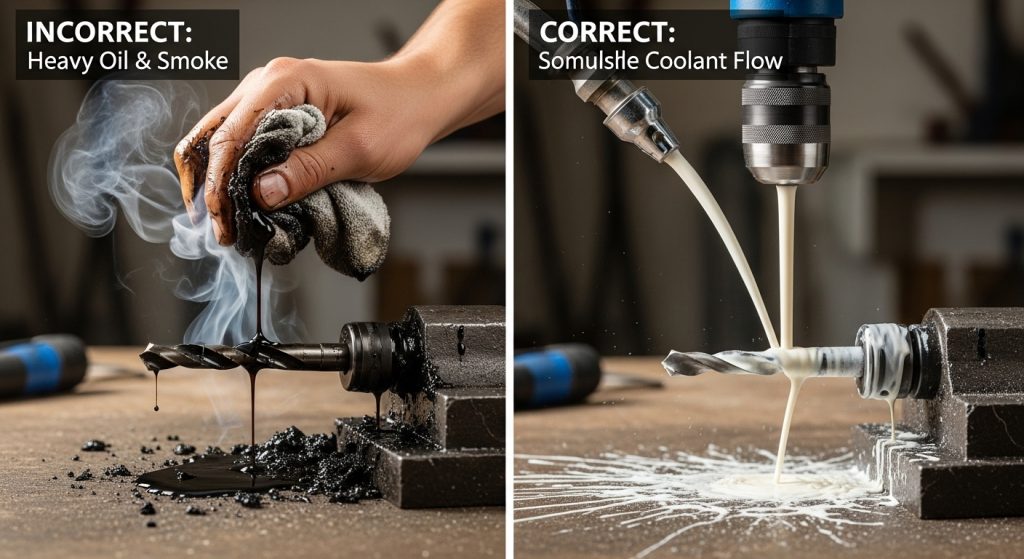
For most steel drilling applications, water-soluble oil (emulsion) is the industry standard. Water is the best conductor of heat, while the oil additive prevents rust and provides lubricity.
If you are drilling alloy steel or stainless where friction is the primary driver of heat, a sulfur-based cutting paste or dark thread-cutting oil is preferable because it clings to the tool under high pressure.
The Peck Drilling Technique
If you are drilling a hole deeper than 3x the diameter of the drill bit (e.g., drilling 1.5 inches deep with a 0.5-inch bit), you must use Peck Drilling.
How It Works
Peck drilling is a cycle:
- Drill: Advance the drill into the material for a short distance (usually equal to the bit diameter).
- Retract: Pull the drill completely out of the hole.
- Dwell: Pause for a split second.
- Repeat: Go back in and drill the next section.
Why This Reduces Heat
Deep holes trap chips. When chips pack into the flutes of the drill, they create immense friction against the sidewalls of the hole. By retracting, you:
- Eject the hot chips: Getting the heat source out of the hole.
- Re-introduce coolant: Allowing fluid to flow down to the cutting tip.
- Air cool: Giving the bit a brief moment of exposure to air.
Tool Selection and Geometry
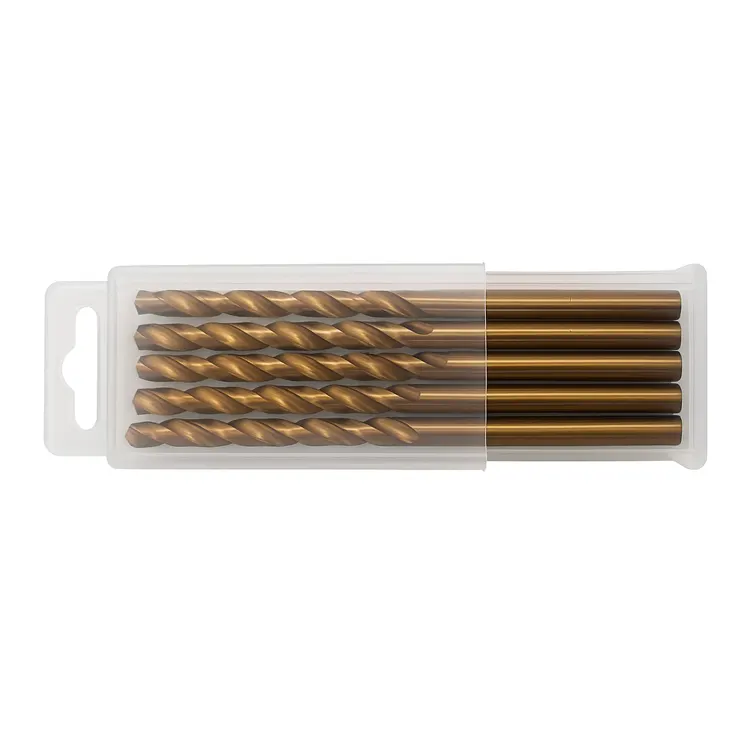
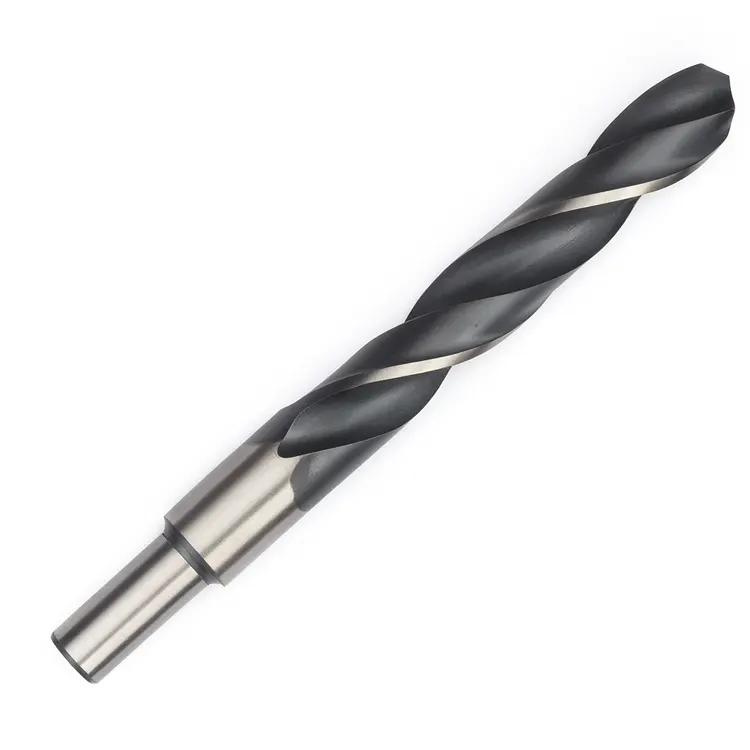
Sometimes, the problem isn’t the technique; it’s the tool. Standard black-oxide High-Speed Steel (HSS) bits are fine for general construction, but they have a low heat tolerance. They begin to soften around 1000°F.
Upgrade to Cobalt (M35 or M42)
For serious steel drilling, Cobalt drill bits are superior. They contain 5-8% cobalt, which gives them “Red Hardness.” This means the bit can become red-hot without losing its temper or hardness. You should also consider specific coating for tough materials to further reduce friction.
Geometry Matters
Look for 135° Split Point bits.
- Standard Point (118°): Has a long “chisel edge” in the center that doesn’t cut; it scrapes. This generates heat before the cut even begins.
- Split Point (135°): The center is ground away, allowing the bit to start cutting immediately upon contact. Less dwell time equals less heat.
Troubleshooting: Reading Your Chips
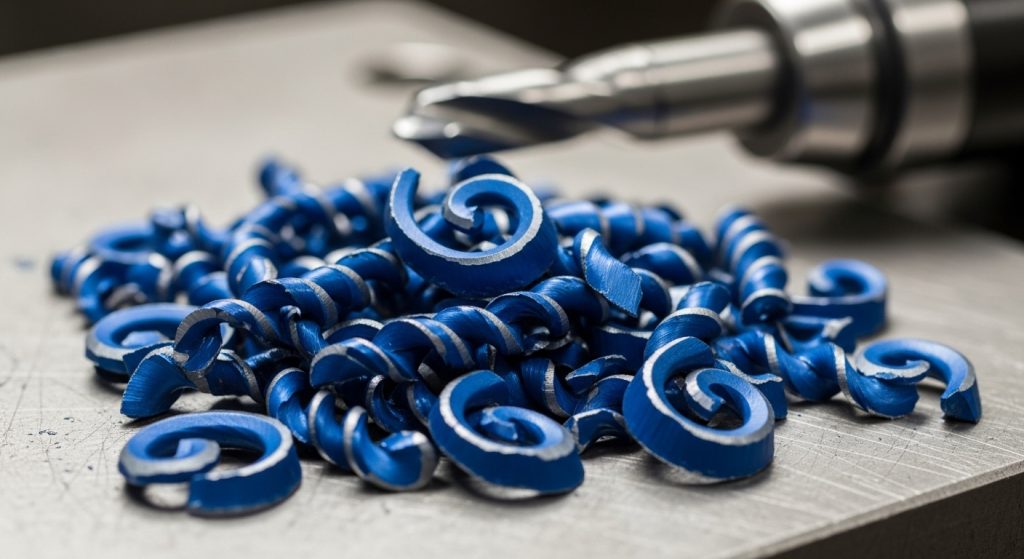
Your chips are your thermometer. By analyzing the color of the waste material coming out of the flutes, you can diagnose your heat levels instantly.
- Silver / Straw Color: This is ideal. The heat is minimal and manageable.
- Blue / Violet: This is actually acceptable in many production environments. It means the heat is being transferred effectively into the chip and away from the tool.
- Smoke / Black: Stop. You are burning the tool and the coolant.
FAQ: Common Drilling Questions
Why does my drill bit smoke when drilling steel?
Smoke indicates excessive heat friction. This is usually caused by a dull bit, running the drill at too high an RPM, or lack of cutting fluid. If you see smoke, stop, let the tool cool, apply oil, and reduce your speed.
Can I use water to cool a drill bit?
Technically yes, as water cools well, but it is not recommended. Water causes instant flash rust on steel and lacks the lubricity needed to protect the cutting edge. Use a water-soluble oil mixture instead.
How do I drill hardened materials without burning the bit?
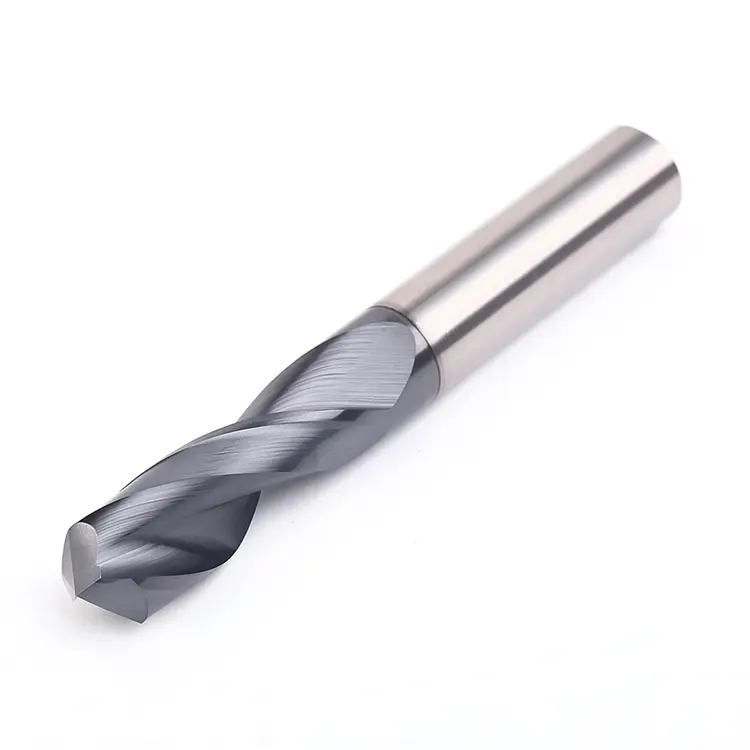
You need a Carbide or Cobalt bit. Run at a slow RPM (30-50% slower than mild steel) and apply heavy, consistent pressure. Read our full guide on how to drill hardened materials. Do not let the bit dwell in one spot without cutting, or the steel will work-harden further.
What is the best coolant for stainless steel?
For stainless steel, high-lubricity coolants are best. Sulfur-based cutting oils or thick wax pastes work well to prevent the material from galling (sticking) to the drill bit.
Conclusion
Reducing heat when drilling steel isn’t about guessing; it’s about balancing your inputs. By matching your RPM to your bit size, applying enough pressure to create a chip rather than dust, and utilizing peck drilling for deep holes, you can dramatically extend the life of your tooling.
Remember the core principles:
- Slow down as the bit gets bigger.
- Push hard enough to create a curl.
- Use coolant to transfer heat.
- Peck to clear the chips.
At Accurate Cut, we specialize in high-performance sawing and machining solutions. If you are looking to optimize your production line or need equipment that handles the heat of industrial manufacturing, we are here to help.
