







How to Improve Chip Evacuation in CNC Drilling
Knowing how to improve chip evacuation in CNC drilling is the single most critical factor in preventing catastrophic tool failure.
If you cannot get the chips out of the hole, nothing else matters. You can have the most expensive carbide drill and the most rigid machine, but if chips pack the flutes, your tool will snap. I have seen thousands of dollars in tooling destroyed in milliseconds simply because the operator ignored the signs of poor evacuation.
This guide covers the definitive strategies to master chip control, ensuring your process remains stable, accurate, and profitable.
Why Is Efficient Chip Evacuation Critical for Tool Life?
Efficient chip evacuation prevents heat buildup, recutting of chips, and catastrophic tool breakage.
When chips are not removed, they clog the drill flutes. This blocks coolant from reaching the cutting tip. The resulting friction causes rapid work hardening of the material and extreme heat. Eventually, the torque spikes, and the drill snaps. Proper evacuation ensures the cutting edge always engages fresh material.
The Mechanics of Failure
In my experience on the shop floor, failure rarely happens instantly. It talks to you first. You might hear a “crunching” sound—that is the drill recutting chips that didn’t leave the hole.
When chips pack, three things happen:
- Heat Spike: The coolant is blocked. The drill expands.
- Surface Damage: Chips drag against the hole wall, ruining the finish.
- Torque Overload: The machine spindle load monitor spikes red, usually right before the “bang.”
To avoid this, you must view the drill flutes not just as cutting features, but as a conveyor belt. If the conveyor stops, the factory shuts down.
How Does Coolant Strategy Affect Chip Removal?
High-pressure coolant acts as a hydraulic ram, forcing chips out of the hole while lubricating the exit path.
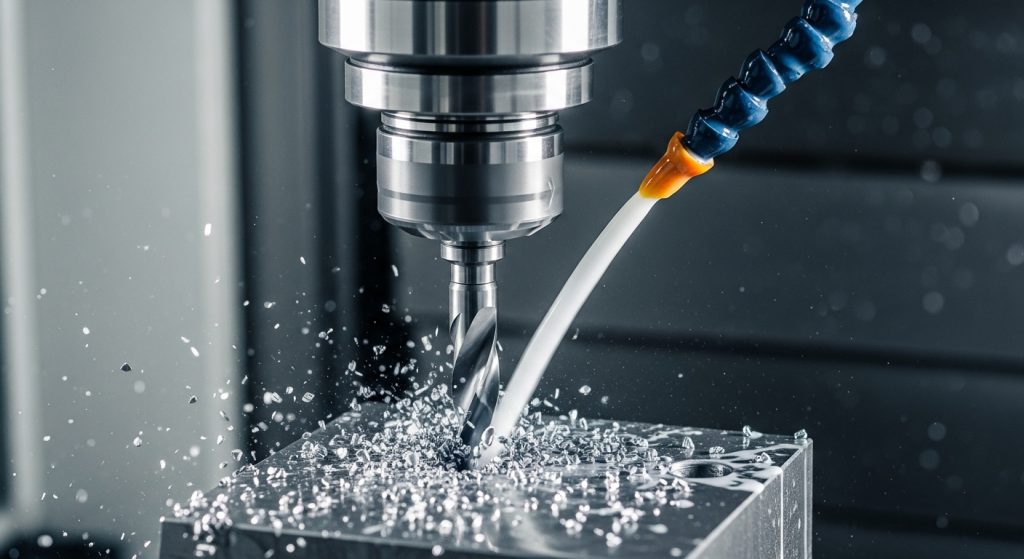
Flood coolant is often insufficient for holes deeper than 3x diameter. Through-Spindle Coolant (TSC) is superior because it delivers pressure directly to the cutting zone. This blasts chips upward and prevents them from welding to the flutes. For deep hole drilling, high pressure is non-negotiable.
Through-Spindle vs. Flood Coolant
If you are running an indexable drill without through-coolant, you are fighting a losing battle on deep holes.
- Flood Coolant: Good for external cooling and shallow holes. It relies on gravity and the helix of the drill to bring chips up. It often fails to penetrate the bottom of deep holes.
- Through-Spindle Coolant (TSC): This is the game changer. By pumping coolant at 300 to 1000 PSI through the tool body, you create a high-velocity stream that carries chips out.
Pro Tip: If you see “smoke” coming from the hole while using coolant, your evacuation has failed. Coolant should leave the hole looking like milk, not steam.
For more on configuring your machine for these conditions, review our CNC Setup Optimization Guide.
Can Adjusting Feed Rates Fix Chip Packing?
Yes, increasing the feed rate is often the best way to break long, stringy chips into manageable pieces.
Novice machinists often slow down when they hear noise, but this causes rubbing. A higher feed rate increases the “chip load,” making the chip thicker. Thicker chips are more brittle and snap easily against the chip breaker. These small C-shaped chips eject easily, whereas long, thin ribbons clog the flutes.
The “Thin Chip” Danger
I once watched an operator turn the feed rate down to 50% on 304 Stainless Steel. The result? A “bird’s nest.” The chips became foil-thin and wrapped around the toolholder tight enough to melt the seals.
You need to push the tool.
| Symptom | Cause | Solution |
| Long, Stringy Chips | Feed rate too low | Increase Feed by 10-20% |
| Drill Wander / Flex | Feed rate too high | Reduce Feed slightly |
| Chipping at Outer Corner | Chatter / Instability | Check Feed Rate Setup for Indexable Drills |
When Should You Use Peck Drilling Cycles?
Use a peck drilling cycle (G83) whenever the hole depth exceeds 3 to 4 times the drill diameter.
Pecking breaks the continuous chip formation and fully retracts the drill to clear the flutes. For materials that produce long strings (like aluminum or plastic) or deep holes where coolant access is poor, pecking resets the cutting environment. It prevents the “packed flute” scenario that kills drills.
G83 vs. G73: Which One?
- G83 (Deep Hole Peck): Fully retracts the drill to the R-plane. This is the safest method for deep holes. It takes longer but guarantees the flutes are empty before the next plunge.
- G73 (High-Speed Peck): The drill only retracts a small amount (e.g., 0.020″) to break the chip. It does not pull out of the hole. Use this for shallower holes or materials that chip easily but need a momentary break.
Warning: If you are using carbide coolant-fed drills, be careful with pecking. The thermal shock of entering and exiting the hole can crack the carbide. Consult the manufacturer’s data.
How Does Tool Geometry Influence Evacuation?
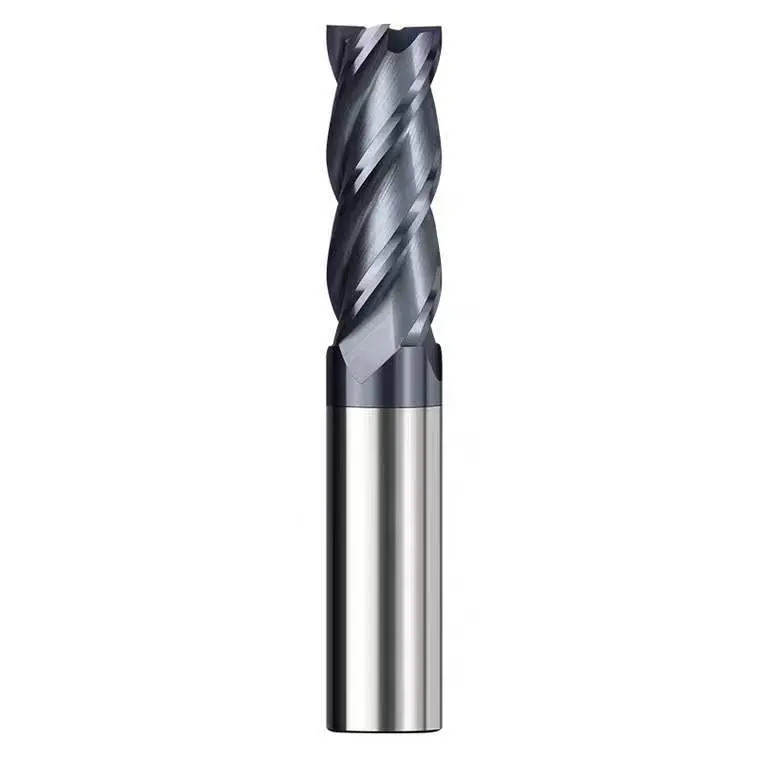
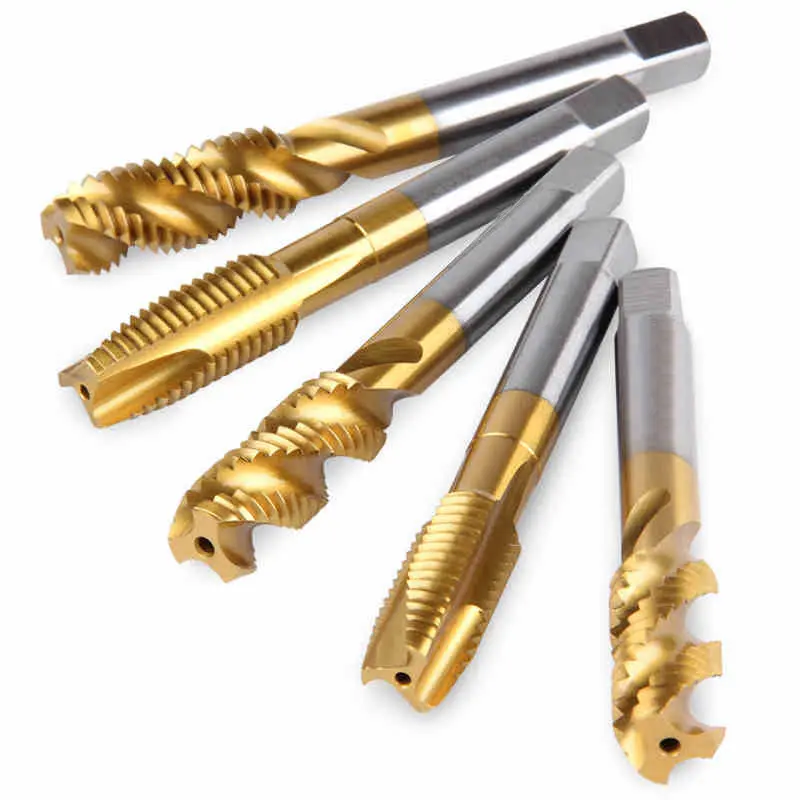
Drills with parabolic flutes and polished surfaces significantly reduce friction and increase the volume available for chip flow.
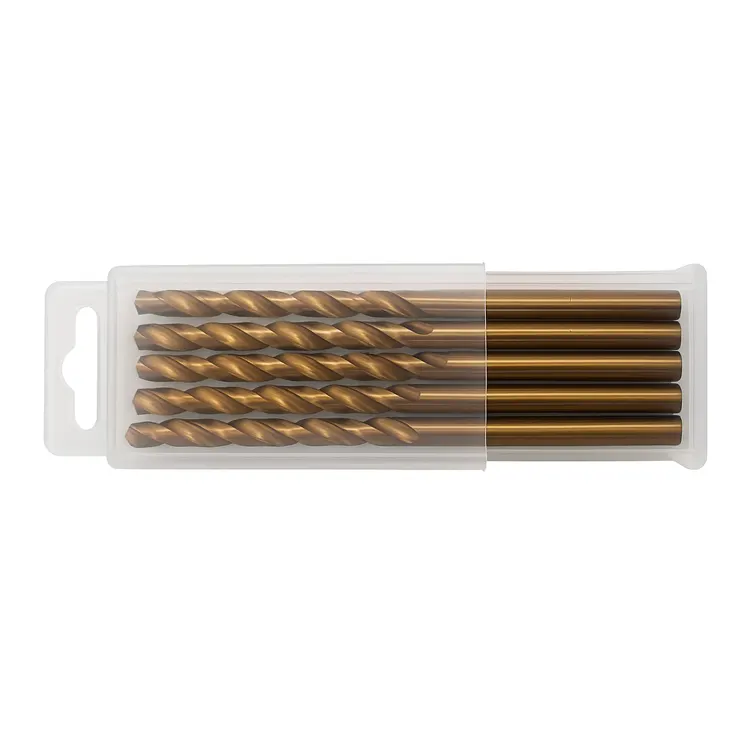
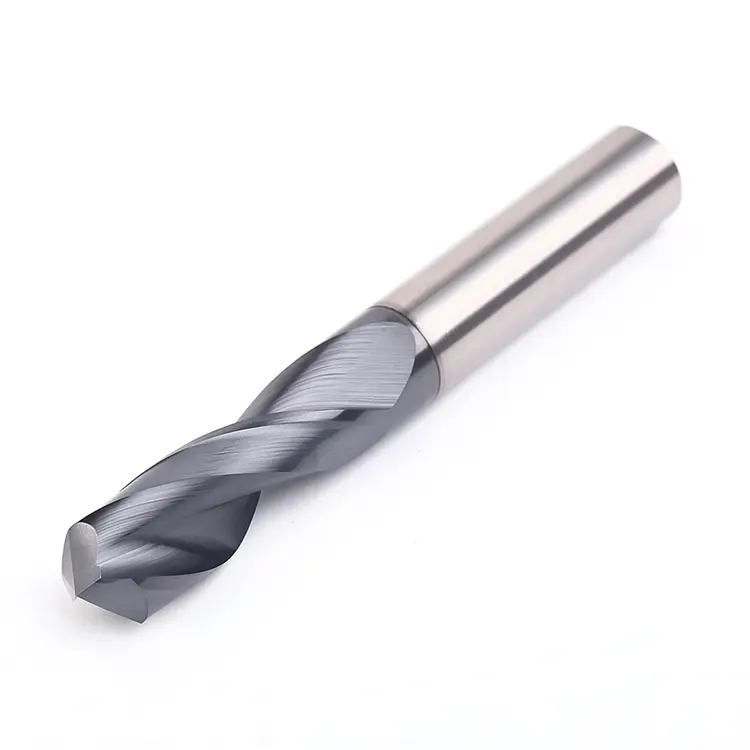
Standard twist drills have a narrow flute space. Parabolic drills have a wider open flute design specifically engineered for deep hole chip removal. Additionally, high-performance coatings like TiN or AlTiN provide a slippery surface, preventing soft metals like aluminum from sticking to the tool.
Choosing the Right Flute Profile
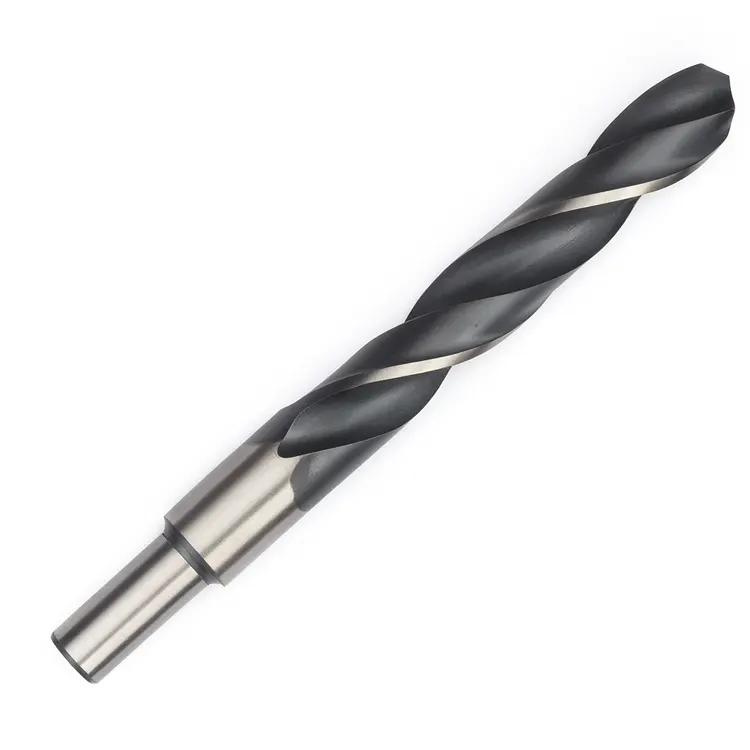
If you are drilling deep into aluminum, a standard black oxide drill is a disaster waiting to happen. The aluminum will “gum up” and weld to the steel.
- Parabolic Flutes: Essential for depths over 5x diameter.
- Polished Flutes: Critical for non-ferrous materials (aluminum, brass, copper).
- Point Angle: A 135-degree split point creates a smaller chip width than a 118-degree point, aiding in ejection.
For setup advice on advanced tooling, refer to our guide on Indexable Drills in Machining Centers.
Strategies for Difficult Materials
Material hardness and ductility dictate your chip evacuation strategy; “gummy” materials need pecking, while hard materials need rigid feeds.
Materials behave differently under the cutting edge. Ductile materials (Low Carbon Steel, Aluminum, Stainless) want to flow and create long strings. Brittle materials (Cast Iron, Brass) crumble into dust or needles. You cannot use the same strategy for both.
The Material Strategy Matrix
| Material | Chip Characteristic | Evacuation Strategy |
| Aluminum (6061) | Long, sticky strings | High RPM, Polished Flutes, Aggressive Pecking |
| Stainless (304) | Tough, work-hardening | Heavy Feed to break chips, High-Pressure Coolant |
| Cast Iron | Powdery / Sludge | Flush heavily to prevent sludge packing; rarely needs pecking |
| Titanium | Springy, high heat | Sharp tools, slow speed, high feed, immediate evacuation |
For specific speed limits regarding these materials, check our RPM Setup Guide.
Troubleshooting: Why Do Chips Pack at the Bottom?
Chips pack at the bottom when the drill cannot lift them faster than they are created, usually due to low helix angles or insufficient coolant pressure.
Gravity works against you in vertical machining centers. As the drill goes deeper, the chips have further to travel to escape. If the helix angle is too slow (standard 30 degrees), the chips slide back down. If the coolant isn’t blasting them up, they get re-cut.
The Re-Cutting Phenomenon
Re-cutting chips is a primary cause of poor hole accuracy. The chips act as an abrasive wedge between the drill and the wall.
- Solution 1: Use a “High Helix” drill (fast spiral) for vertical blind holes.
- Solution 2: Implement a dwell (G04) at the bottom of the hole for a fraction of a second to allow the final chips to clear before retracting (use with caution on work-hardening materials).
Poor evacuation directly impacts tolerances. Read more about Hole Accuracy in CNC Drilling.
Lathe vs. Mill: Does Orientation Matter?
Yes, horizontal drilling (Lathes/HMCs) aids evacuation via gravity, while vertical drilling (VMCs) fights gravity and requires better coolant flow.
On a lathe, chips naturally fall away from the cut. On a vertical mill, you have to lift the chips out. This makes deep hole drilling significantly easier on a lathe or horizontal machining center.
Lathe Specific Considerations
However, lathes have their own issues. If the drill is slightly off-center, the chips will not form equally, leading to one flute doing all the work. This causes the drill to drift.
Also, be mindful of “bird nesting” on the boring bar or drill shank in a lathe. A giant ball of stringy chips can block coolant nozzles completely.
- Related Guide: How to Use Indexable Drills on a Lathe
- Related Guide: Best Toolholders for Indexable Drills
Summary Checklist for Perfect Chip Control
To ensure you never snap a drill due to packed chips again, follow this checklist before hitting the green button:
- Check Coolant: Is the pressure high enough? Are the nozzles aimed at the hole entrance?
- Inspect Tool: Is the coating intact? Are the flutes polished?
- Verify Feed: Is the chip load heavy enough to break the chip?
- Select Cycle: Do you need G83 pecking for depth?
- Listen: Does the cut sound consistent, or is it crunching?
Chip evacuation is not just about cleanliness; it is about process security. Master this, and your lights-out machining will run flawlessly.
