







Roughing End Mill | CNC & Industrial Milling 2025 Solutions
What is a Roughing End Mill?
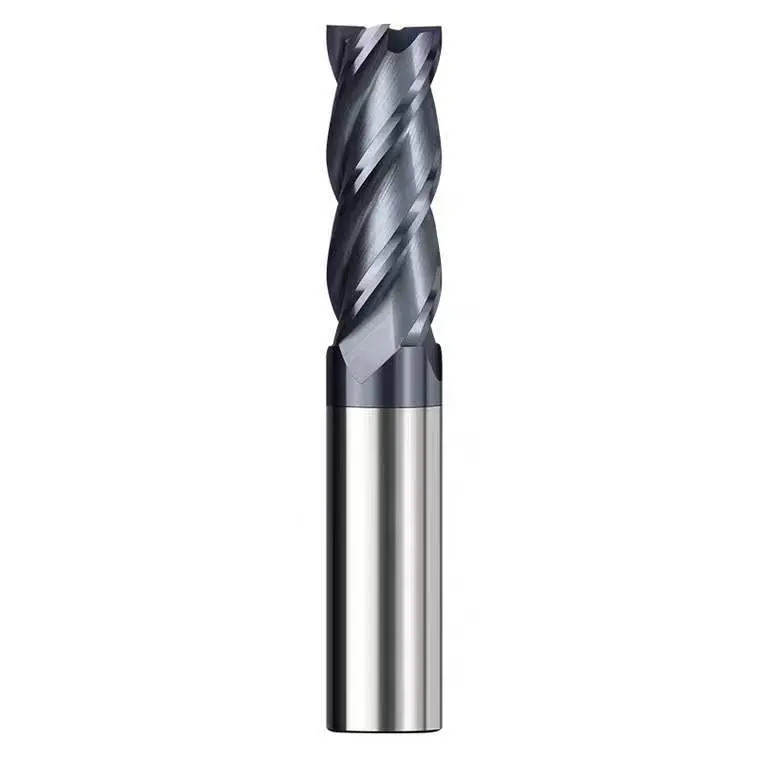
- A hogging or high-feed end mill, often referred to as a roughing end mill, is a special milling cutter generally used to remove heavy material. In contrast to finishing end mills, roughing mills are designed to cut significant amounts of metal as fast as possible, leaving behind a slightly textured surface which may subsequently be removed by finishing passes.
- These are the best tools to use in CNC roughing mills, where the most important factors are efficiency, speed, and precision. They are intended to minimize machining time and maximize tool life, and are a fundamental aspect of high-speed industrial milling.
Types of Roughing End Mills
Roughing mills are available in many different applications to fit different materials, jobs, and machine configurations:
- Spiral Roughing End Mill
The spiral roughing cutter is a tool with a helix angle and spiral flute design, enhancing chip removal and decreasing vibration. It is especially good in slotting, profiling, and pocketing plastic metals such as steel, aluminum, and stainless steel.
- Ball Nose Roughing End Mill
The ball nose roughing end mill is ideal for 3D contouring and on complex surfaces, as it can smoothly transition between surfaces without the removal of bulk material. It is widely applied in aerospace machining and automotive components machining.
- Flat End Roughing Mill
The standard face milling, slotting, and shoulder milling operations are performed on a flat-end roughing mill. Its straight cutting edges combine uniform scrappage and high stability in high-feed milling.
- Multi-Flute Roughing End Mill
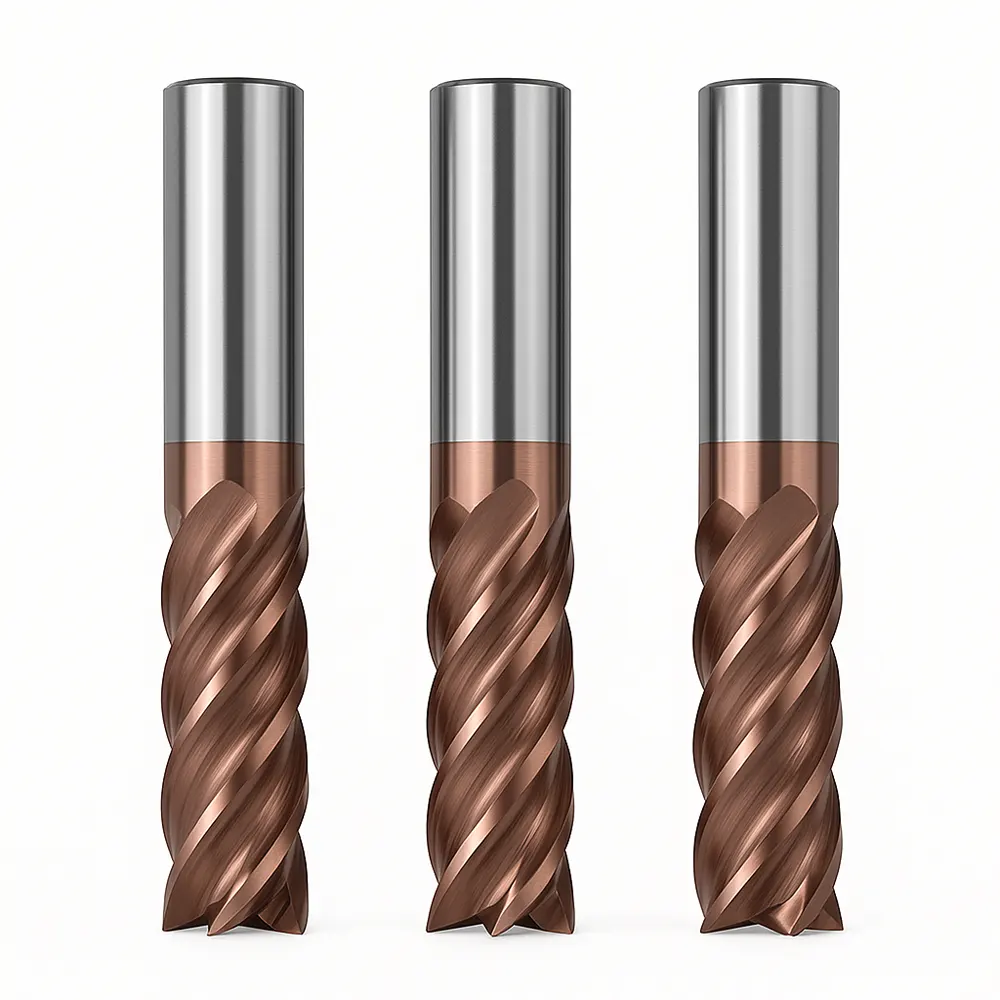
Such end mills possess more than one cutting edge, which enhances the ability of these mills to remove chips and also minimizes the vibration. Multi-flute designs are popular in high-performance roughing mills that work on hard metals.
Coating and Materials
Roughing mills are made of high-quality materials that can withstand high cutting forces and retain accuracy:
- HSS Roughing Mill (High-Speed Steel): This type is durable and can be used in medium-speed milling jobs.
- Carbide Roughing Mill: This type of end mill is best used to cut high-speed and hard metals because it is harder.
- Cobalt Roughing Mill: Improved tough material wear resistance.
- TiN, TiCN Coated Mills: A longer tool life, lower friction, and higher cutting speeds are achievable.
Characteristics of High-Performance Roughing End Mills
The roughing end mill is designed to maximize cutting life, minimize tool life, and enhance the machining stability. Key features include:
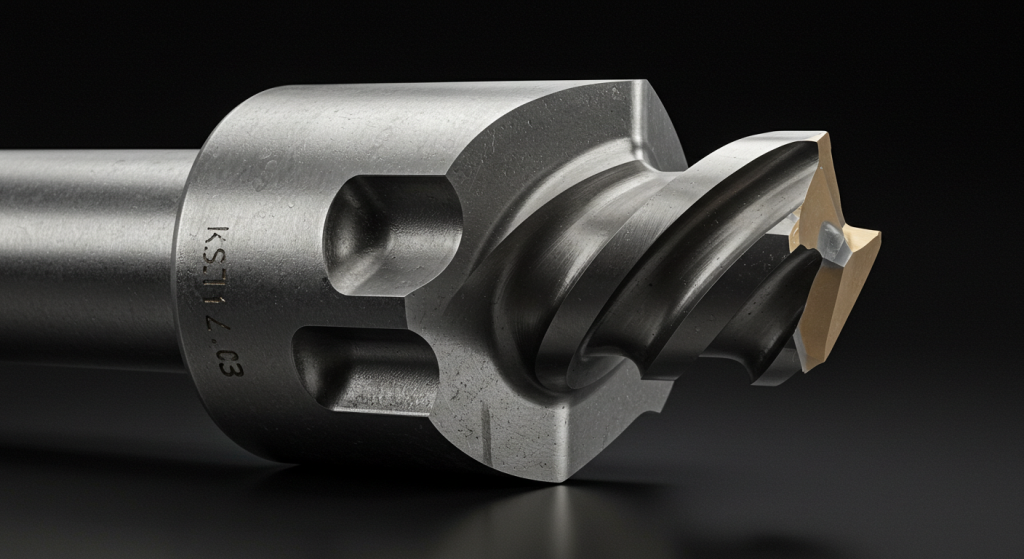
- Tungsten Steel Cemented Carbide Substrate Micro-Particle
Gives strength and usefulness to high-hardness, high-speed cutting.
- Bronze Edge Coating
Rises tool hardness, extends life, improves surface finish, and decreases production time.
- Anti-Vibration Design
Stems chatter, finish surface better, reduce burrs, and machine more smoothly.
- Large Core Diameter
Minimizes tool wear, increases rigidity, and provides better anti-vibration.
- Universal Round Handle, Chamfered
Enhances high grip, increases cutting stability, and adjusts to high-speed work.
- Big Chip Flute Pattern
Stops clogging, minimizes heat production, and gives the cutting edge a sharp edge.
Semantic and technical terms: speed of cutting, feed rate, machining accuracy and tolerance, tool hardness and wear resistance, rough milling chip control.
Uses of Rough End Mills
Roughing mills can be used in a variety of industries:
- Steel and Aluminum Milling: A large amount of metal is removed efficiently to be used as structural elements.
- Cast Iron and Stainless Steel: Tough materials used in the automotive and aerospace industries.
- Copper and Brass Milling: Provides a good cut with few burrs.
- Aerospace Components: Best suited to intricate geometries and rapid material removal.
- Automotive Engine Blocks: High-feed roughing mills shorten the production process.
- Hydraulic Systems and Pneumatic Systems: Threading and slotting of fittings is reliable.
Industrial and application-related semantic wordings: CNC milling, removing metal stock, high-speed milling, precision milling on production lines, and industrial machining solutions.
Choosing an Adequate Roughing End Mill
Several factors should be considered when selecting the roughing end mill:
- Material to Be Machined
High-speed carbide or coated HSS end mills are needed for steel and stainless steel.
- Type of Milling Operation
Flute design and helix angle are determined by slotting, profiling, or roughing at high feeds.
- Machine Compatibility
Make sure that the end mill is compatible with CNC or manual milling configurations.
- Coating Selection
TiCN where high hardness is required, AlTiN where thermal resistance is needed, or TiSiN where long life heavy-duty is the requirement.
- Cutting Parameters
Maximize speed, feed, and depth of cut to achieve accuracy when roughing the mill.
Maintenance of Roughing End Mills
Adequate maintenance will guarantee the life of the tools and their performance:
- Sharpening and Regrinding
Clean worn tools by regrinding to keep the cutting edge geometry.
- Lubrication
Use high-speed steel and coated end mill cutting fluids.
- Reducing Vibration
Apply anti-vibration design and appropriate feed rates.
- Tool Life Optimization
Check the wear of the monitor and replace it where needed, and do not overload the cutter.
Benefits of Using High-Performance Roughing End Mills
- Increased Productivity
Is it possible to take off huge amounts of material more quickly, saving machining time?
- Enhanced Tool Life
Anti-vibration designs and coatings such as TiCN increase service life.
- Improved Surface Quality
In even roughing, burrs are eliminated by chip breaker flutes.
- Materials Versatility
Acceptable with steel, aluminum, cast iron, stainless steel, and alloys.
- CNC and Manual Compatibility
It can be used in automated CNC machines and traditional milling machines.
- Custom Specifications
Non-standard customization of unique machining requirements.
Conclusion
Roughing with end mills is a prerequisite in contemporary metalworking and CNC milling. They are fast, precise, and durable, and can be used in a wide range of industrial environments: aerospace, automotive, and heavy metal fabrication. Integrating technical capability, highest quality coating, and anti-vibration configurations, the roughing end mill of AccurateCut offers a stable solution to machinists in need of high-performance, heavy-duty milling cutters that deliver repeated results in harsh conditions.
