







Best Ball Nose End Mill | Solid Carbide & CNC Milling Cutter
What is a Ball Nose End Mill?
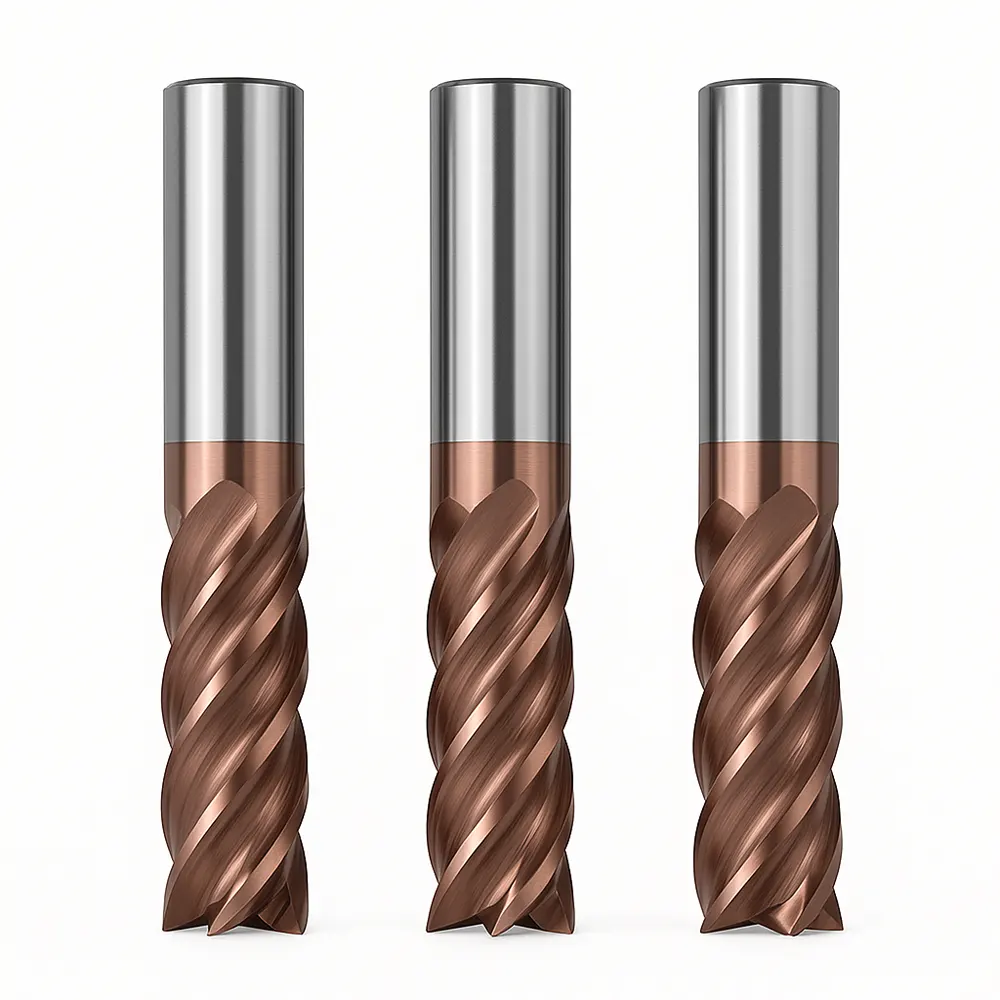
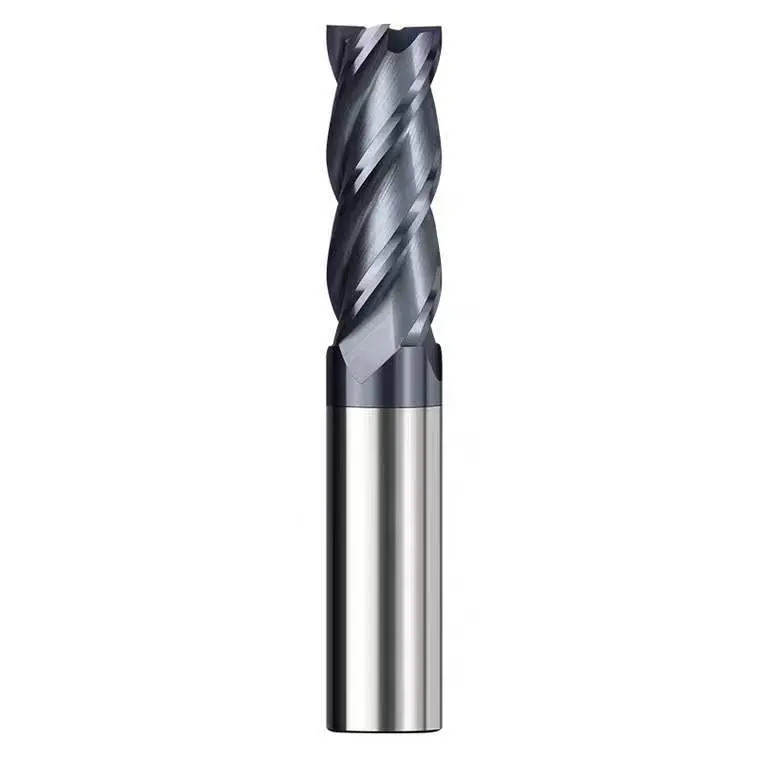
A ball nose end mill, or ball end cutter, or round nose cutter is a cutting tool with a hemispherical cutting tip. The geometry enables it to deliver fluid shapes, modeled surfaces, and complicated lines with few tool marks. The mill is superior to a traditional flat end mill with its squared-off tip, which is perfect for slotting or cutting edges; however, the mill does not perform as effectively in 3D contour machining, mold cavity machining, or surface finishing.
The rounded end is especially useful in radius milling, multi-axis milling, and toolpath optimization in CNC. It can trace complex lines, easily cut along curved lines, and blend surfaces precisely- making it a finishing end mill of choice when it comes to mold and die production.
What is the Action of a Ball Nose End Mill?
It is a rotary end mill in which its hemispherical end is rotated at high speeds, engaging the workpiece. Cutting-edge design and flute geometry are critical to chip evacuations, tool life optimization, and feed rate optimization.
In the case of a CNC milling tool, the toolpath strategy defines the efficiency with which the tool can mill 3D surfaces. The helix angle provides a perfect cutting action, and the flute pattern facilitates better evacuation of the chips when performing deep pocketing or intricate contouring.
DLC coating, TiAlN, TiCN, AlTiN, and other advanced coating types provide better wear resistance and heat resistance, and cutting accuracy, which enable the tool to work in a high-speed machining environment.
What is the Purpose of Using a Ball Nose End Mill?
The primary uses of ball nose cutters are:
- Contour milling and 3D profiling.
- Machining of sculptured surface.
- Die surface finishing
- Operation of slot cutting and pocketing.
- Mold cavity machining and engraving uses.
They are particularly popular in mold making, die manufacturing, and 3D machining, where precision and surface finish are the metrics of success. The ball nose end mill provides high geometrical conformity with minimal hand-finishing in applications such as aerospace component machining, automotive die manufacturing, and medical device tooling.
Types of Ball Nose End Mills
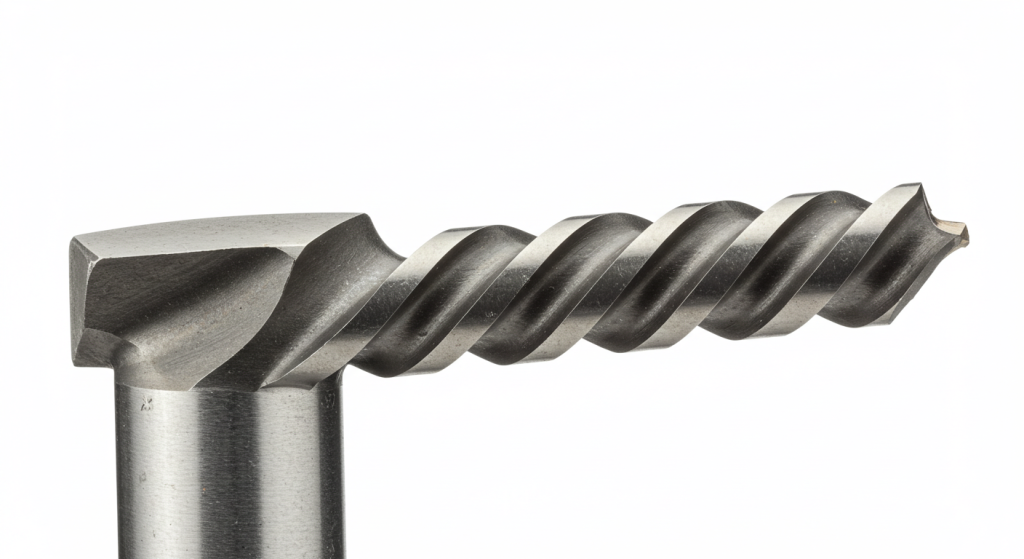
When selecting the appropriate tool, it is important to start by knowing the types of options available:
HSS Mill - This end mill is used in general-purpose machining and provides low cost and versatility in handling soft materials such as aluminum and plastic.
Carbide Mill - Provides better hardness and performance in steel and cast iron.
Solid Carbide Mill - It offers excellent cutting accuracy, high speed, and high tool life.
Carbon Steel Tungsten Mill - The heat-resistant and low-vibration cutting characteristics are an ideal choice when dealing with stainless steel and heat-treated steel.
Cobalt Mill (HSS-Co) - Durable, heat-tolerant, and good with hard alloys.
Micro-Grain Carbide Mill - Provides good surface finish and proper contour machining in high-precision work.
Optimization of Ball Nose End Mill Cutting Speed and Feed Rate
Cutting parameters are optimized to provide a longer tool life and a better surface quality. For example:
HSS mills are usually run at a lower speed (20-40 m/min).
Depending on the coating and the hardness of materials, solid carbide and tungsten carbide mills can run at speeds greater than 150-300 m/min.
Feed rate must be changed according to the design of the flute, tool diameter, and machining tolerance.
Correct toolpath strategy, coupled with a high level of CAD/CAM integrity, ensures a consistent cutting engagement, with minimal chattering and tool deflection.
Ball Nose and Flat End Mill Compared
Flat end mills are more efficient in slotting, edging, and drilling, but ball nose cutters have no equivalent when it comes to 3D profiling and radius cutting. The rounded end decreases angular changes and eliminates tool marks, leading to a better surface finish.
In a comparison of ball nose end mill and bull nose cutter, it is evident that the ball type produces deeper curves, whereas a bull nose cutter (corner radius cutter) carves curves and flats together to form part of 3D shapes.
The Selection of a Ball Nose End Mill
To choose the right cutter, one has to consider several factors:
- Type of material (steel, aluminum, wood, plastic)
- Flute length and tool diameter.
- Coating requirement (TiAlN, TiCN, DLC)
- Cutting speed and feed rate
- Machining operation (roughing, semi-finishing, finishing)
Also, the accuracy of the radius, helix angle, and flute geometry defines the accuracy of the tool to retain precision in multi-axis machining.
Tips to Maintain
To increase the tool life and achieve a consistent performance:
Periodically check on edge wear or chipping.
Store instruments in order and oiled.
Bringing the coolant flow is recommended to enhance the chip evacuation.
Regrind: radius wear over 10-15% the original size.
Preventive maintenance gives higher productivity and low vibration cutting with industrial mills, even with heavy workloads.
Sizes and Dimensions
These mills are available with standard 1 mm to 25 mm diameters, and the shank is available as per CNC tool holders. The short or long shank is a decision based on the required machining depth and rigidity.
When machining a deep cavity, long shank tools are favored, and shorter shanks reduce vibration when machining at high speeds.
What is the Reason to Use a Professional Ball Nose End Mill?
A ball nose end mill that is professional provides:
- Superior cutting and smooth radius cutting.
- Less tool deflection due to the weight.
- Improved wear resistance by higher-quality coating.
- Fine contour machining of 3D parts.
- Long life span of tools and constant performance under high-speed conditions.
Our own precision mills at AccurateCut are subjected to strict quality control and provide both machining accuracy and repeatability between production batches.
Custom and OEM Solutions
Need to have a tool fabricated? Our OEM mill factory services will custom-design a mill to specific CNC milling requirements and complex contour machining requirements. Our engineers combine the innovativeness of the tool design and the CAD/CAM optimization to achieve the highest efficiency.
Your ball nose cutters may require carbide-tipped ball nose cutters, HSS-Co ball nose tools, or nano-coated high-performance end mills, but we guarantee that all of our products meet international machining standards.
Conclusion
The ball nose end mill is an essential radius milling cutter in a precision-driven CNC machine capable of molding, forming complex shapes, and 3D profiles. Starting with solid carbide to tungsten carbide versions, either design has a tradeoff between strength, speed, and finish quality. To purchase the highest-quality mills, custom orders, or volume purchases, turn to AccurateCut - your preferred mill source and industrial precision tooling company with the solution to industrial machining that is manufactured to perfection.
