







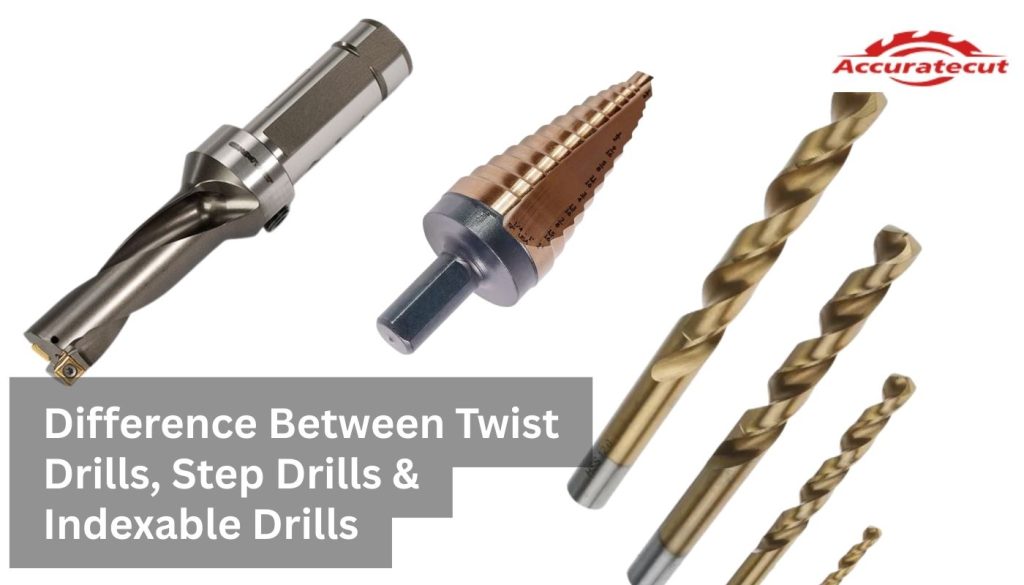
Difference Between Twist Drills, Step Drills & Indexable Drills
A Complete Technical & Practical Comparison for Industrial and CNC Drilling
Choosing the right drill is not just about hole size — it directly impacts machining speed, accuracy, tool life, surface finish, and production cost. Twist drills, step drills, and indexable drills are three commonly used drilling tools, but they are built for very different applications. Understanding how each one works, where it performs best, and what its limitations are can significantly improve machining efficiency and product quality.
This guide breaks down their design, performance, material suitability, pros and cons, and industrial use cases, so you can confidently select the right tool for each drilling task.
1. Twist Drills – The Universal Drilling Tool
What Is a Twist Drill?
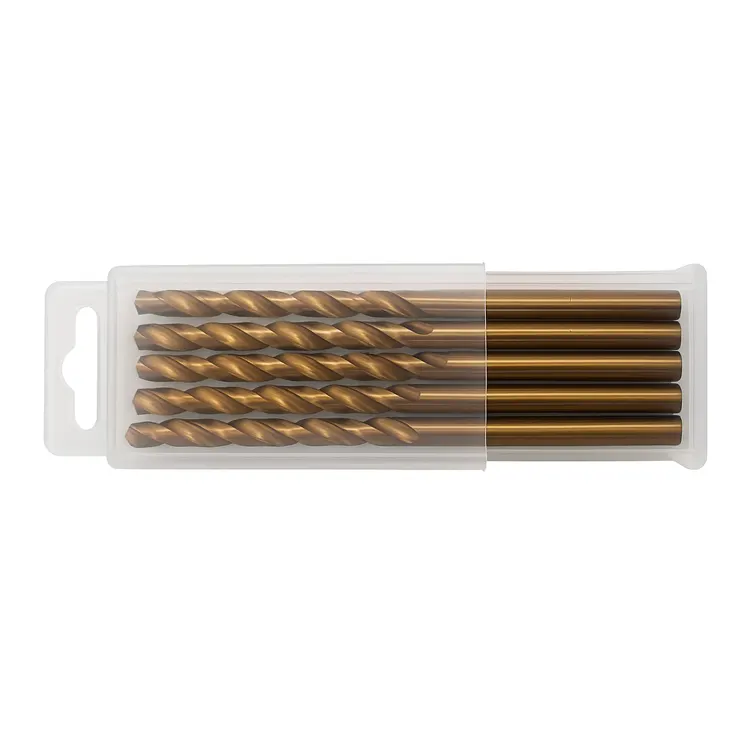
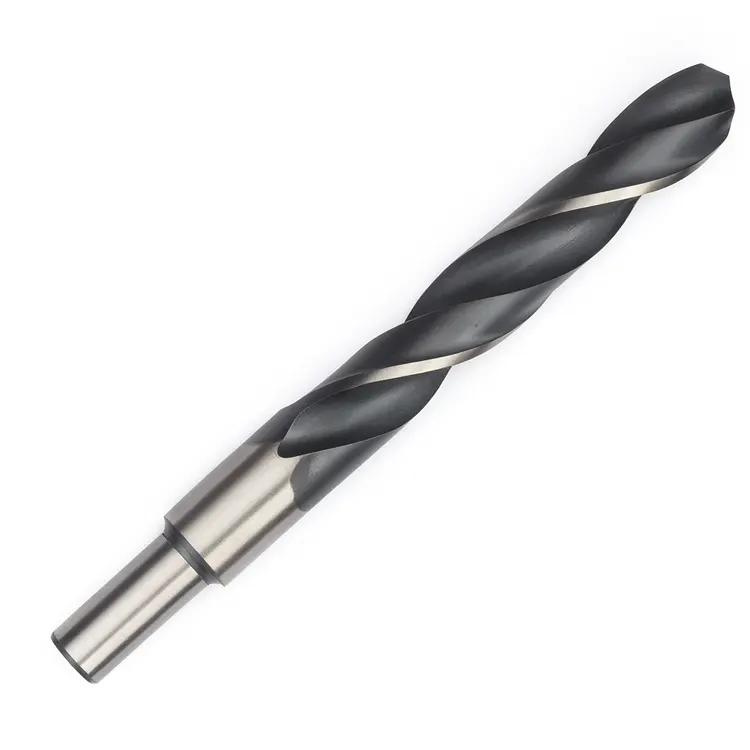
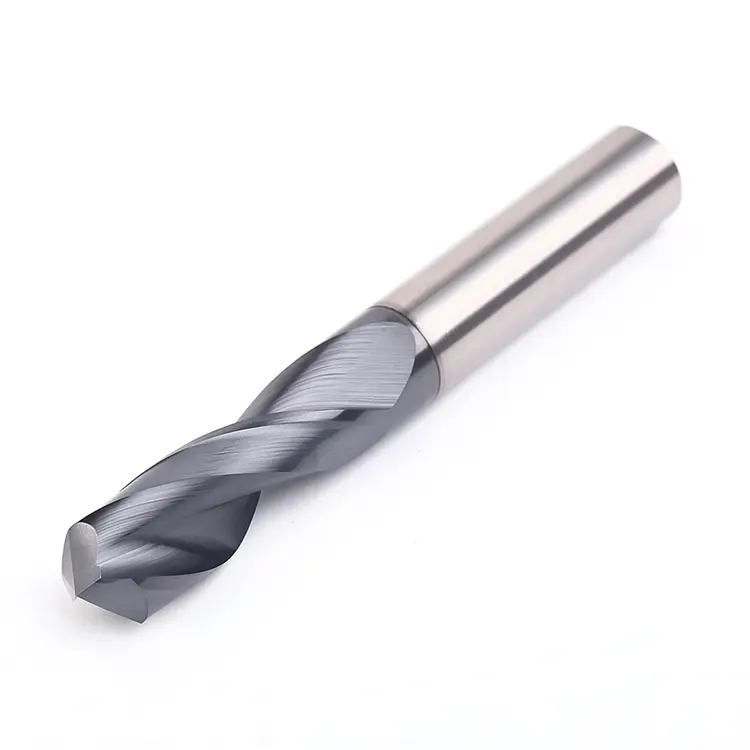
A twist drill is the most widely used drill bit for creating cylindrical holes in metals, plastics, and non-metal materials. Its helical flute design allows chips to move upward while coolant reaches the cutting edge. Twist drills are commonly used for deep holes, small-to-medium diameters, and general-purpose drilling in workshops and production environments.
Structural Characteristics
- Helical (Spiral) Flutes: Transport chips away from the cutting zone and assist cooling
- Point Angle (118° or 135°): Affects centering, cutting force, and material suitability
- Primary Cutting Edges: Do the main cutting at the tip
- Secondary Cutting Edges: Improve stability and hole quality
- Guide Margins: Maintain hole diameter and reduce vibration
- Uniform Body Diameter: Ensures consistent hole sizing
Drill Geometry & Twist Angle Types
The geometry of a twist drill must match the workpiece material:
- Type W (Large Helix Angle): Best for soft materials like aluminum and plastics
- Type N (Normal Helix Angle): Suitable for general-purpose materials such as mild steel
- Type H (Small Helix Angle): Designed for harder materials like stainless steel and tougher alloys
As material hardness increases, the helix angle should decrease to improve tool strength and stability.
If the material does not dissipate heat well, a smaller point angle helps manage thermal load at the cutting edge.
Typical Applications With Twist Drills
- Electronics Manufacturing: PCB drilling and connector holes with minimal burr formation
- Aerospace: Structural components and engine parts requiring tight tolerances
- Automotive: Engine blocks, aluminum body parts, and brackets
- Medical Devices: Precision holes in surgical tools and implant components
Pros
- Highly versatile across many materials
- Twist Drills are suitable for deep hole drilling
- Widely available and cost-effective
- Easy to use on manual and CNC machines
Cons
- Tool wears out completely when dull
- Twist Drills can walk or drift without proper centering
- Slower in high-volume industrial production
- Twist Drills requires regrinding or replacement
2. Step Drills – The Specialist for Thin Materials
What Is a Step Drill?
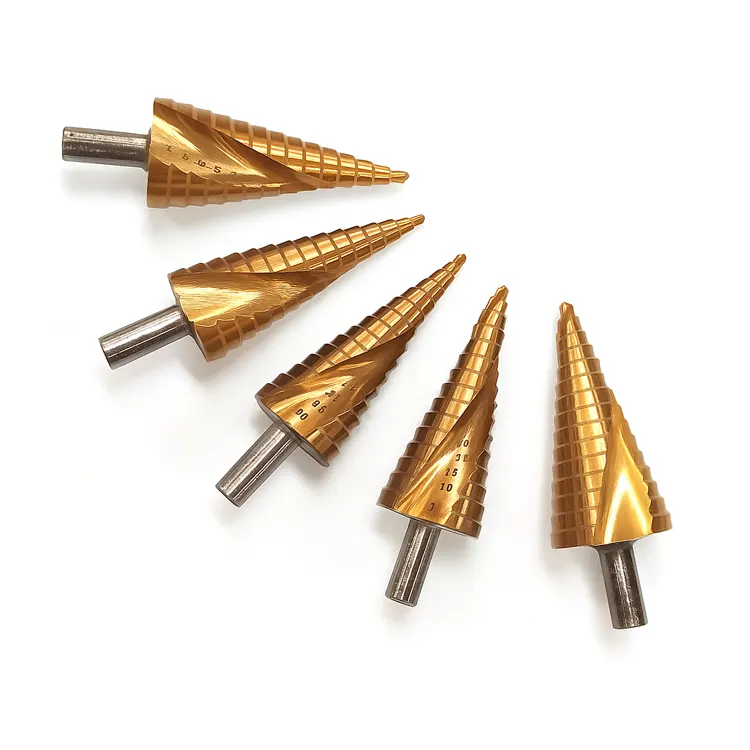
A step drill features multiple cutting diameters arranged in a stepped, conical profile. Instead of changing tools for different hole sizes, one step drill can create several diameters in thin materials. This makes it ideal for sheet metal, pipes, profiles, and panels.
Structural Characteristics
- Stepped Diameter Design: Each step corresponds to a specific hole size
- Central Tip: Helps initial positioning and stability
- Cutting Edge on Each Step: Gradually enlarges the hole
- Conical Profile: Enables smooth transitions between diameters
Typical Use Cases With Step Drills
- Thin Sheet Metal Fabrication: Electrical enclosures and panels
- Automotive Sheet Components: Mounting holes in body panels
- Electrical Assembly: Fast drilling for connectors and terminals
- DIY & Maintenance Work: Convenience for multi-size hole requirements
Step drills are widely used for burr-free drilling and light reaming of thin metal sheets, tubes, and profiles. They can be operated using hand or pillar drills, and light-duty machines. Pre-drilling is recommended for harder materials to improve accuracy and tool life.
Pros
- One tool creates multiple hole sizes
- Step Drills reduces tool changes and downtime
- Cleaner holes with fewer burrs
- Ideal for thin materials
Cons
- Step Drills are not suitable for deep holes
- Limited performance on thick materials
- Faster wear on harder metals
- Less precise in tight-tolerance machining
3. Indexable Drills (U Drills) – High-Performance CNC Drilling
What Is an Indexable Drill?
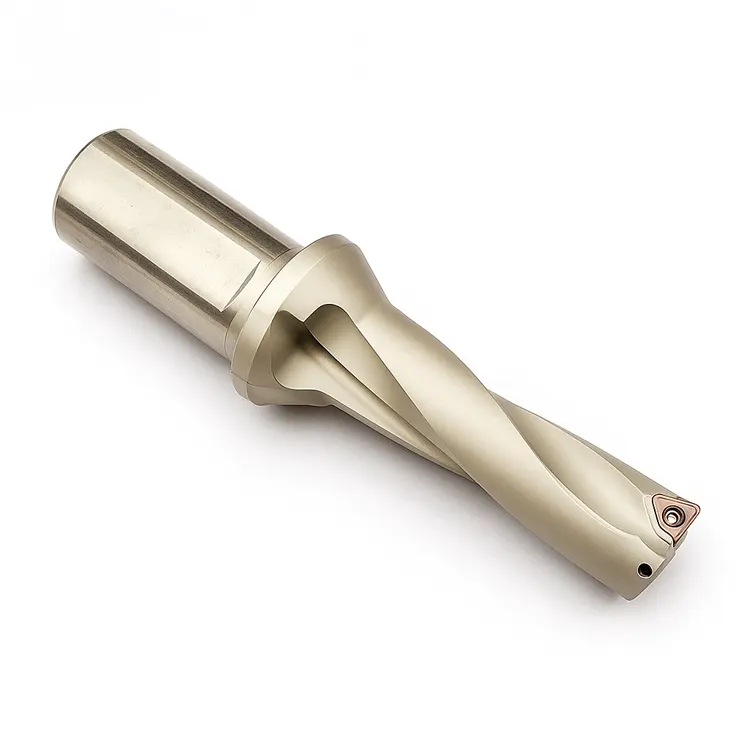
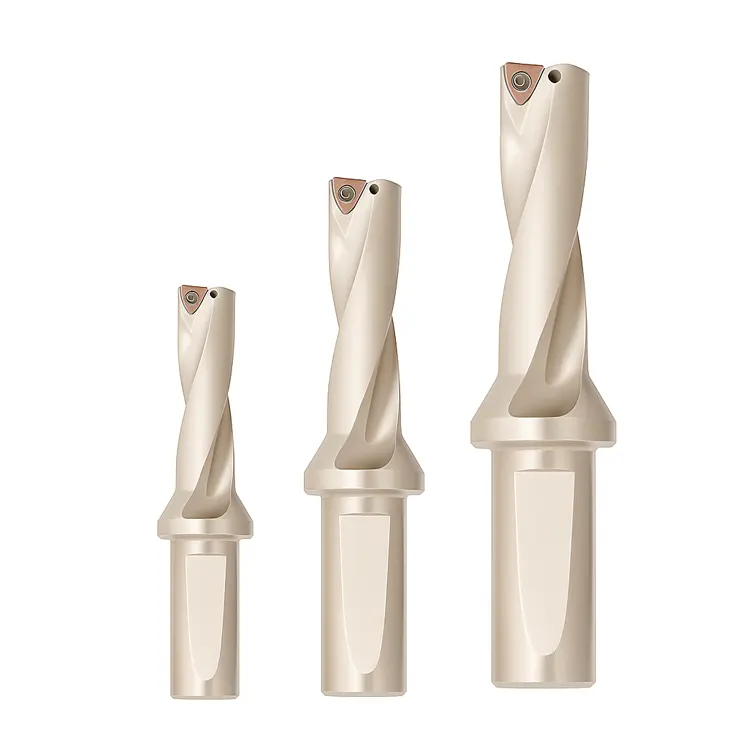
Indexable drills, also called U drills, are industrial drilling tools primarily used in CNC machining. They consist of a rigid tool body that holds replaceable carbide inserts. When an insert becomes dull, it can be indexed or replaced without changing the entire drill.
The U-shaped flute design improves chip evacuation, making these drills suitable for high-speed, high-volume production.
Structural Characteristics
- Replaceable Carbide Inserts: Lower long-term tooling cost
- Wide Straight Grooves: Efficient chip evacuation
- Strong Tool Body: Handles high cutting loads
- Accurate Centering Geometry: Improves hole straightness
- Insert Grades for Different Materials: Optimized cutting performance
Typical Applications With Indexable Drills
- CNC Metal Machining: Aluminum, copper alloys, steel
- Automotive Production Lines: High-speed drilling in engine and transmission components
- Industrial Manufacturing: Batch production and repetitive hole-making
- Plastic & Engineering Polymers: PVC, polycarbonate, and similar materials
Pros
- Extremely fast material removal
- Inserts can be replaced instead of changing the whole tool
- Consistent hole quality in production runs
- Reduced downtime in CNC operations
Cons
- Higher initial investment
- Requires stable machines and correct parameters
- Not economical for low-volume or occasional drilling
- Setup and alignment are more critical
4. Comparison Summary
| Feature | Twist Drill | Step Drill | Indexable Drill (U Drill) |
|---|---|---|---|
| Primary Use | General-purpose drilling | Thin sheets & multi-size holes | High-speed CNC production |
| Structure | Helical flutes, single diameter | Stepped, conical profile | Solid body with replaceable inserts |
| Versatility | High (many materials) | Medium (thin materials only) | High for production machining |
| Cost | Low initial cost | Medium | High upfront, lower long-term |
| Material Thickness | Thin to thick | Thin materials only | Medium to thick |
5. Which Drill Should You Choose?
Choose Twist Drills when:
- You need general-purpose drilling
Twist drills are the most versatile option and work well for everyday drilling tasks across workshops, fabrication units, and maintenance jobs. - You’re working with different materials
They perform reliably on metals, plastics, and non-metal materials, making them suitable when material types vary across jobs. - You need to drill deeper holes
The helical flute design supports efficient chip evacuation, which helps maintain accuracy and tool stability in deeper drilling operations. - Your budget is limited or tooling cost matters
Twist drills have a low upfront cost and are easy to replace, making them economical for low-to-medium production volumes.
Choose Step Drills when:
- You are drilling thin sheet metal or panels
The stepped profile prevents grabbing and tearing, making step drills ideal for thin materials where conventional drills may deform the sheet. - You need multiple hole sizes with one tool
A single step drill can create several diameters, reducing the need to switch tools and speeding up simple fabrication work. - Clean edges and minimal burrs are important
Step drills enlarge the hole gradually, which helps produce smoother edges and reduces post-processing like deburring. - You are using hand drills or bench/pillar drills
Step drills are easy to control in manual operations and are commonly used in electrical, installation, and light fabrication work.
Choose Indexable Drills (U Drills) when:
- Hole accuracy and consistency are critical
Indexable drills offer stable cutting geometry, which improves repeatability, surface finish, and dimensional control in production machining. - You are operating CNC machines or production lines
Indexable drills are designed for rigid, high-speed machining environments where stability and repeatability are essential. - You are producing parts in large quantities
The replaceable insert system reduces downtime and maintains consistent performance across long production runs. - You want to minimize tool change and setup time
Inserts can be rotated or replaced quickly without removing the tool body, keeping machines running longer.
Final Thoughts
Twist drills, step drills, and indexable drills each serve a distinct purpose. Twist drills are the backbone of everyday drilling. Step drills shine in sheet metal and multi-diameter work. Indexable drills dominate high-speed CNC machining where productivity and tool economy matter most.
Using the wrong drill increases tool wear, machining time, and production cost. Matching the tool design to material thickness, production volume, and accuracy requirements ensures better surface finish, longer tool life, and higher machining efficiency.
